2022 Hopewell Observatory
Spring Open House and Star Party
October 15
Anybody interested in the night sky, including members of local astro clubs like NCA and NOVAC, are invited to the Fall 2022 astronomical open house and star party at Hopewell Observatory on the night of October 15 (Saturday evening and on into Sunday morning), 2022. Feel free to pass this invitation to friends, neighbors, and family and anybody else you care to notify.
(Note: I am updating this entry, which was originally published in 2016!)
We are located about 30 miles west of the Beltway on Bull Run Mountain – a ridge that overlooks Haymarket VA from an elevation of 1100 feet, near the intersection of I-66 and US-15. Detailed directions are below.
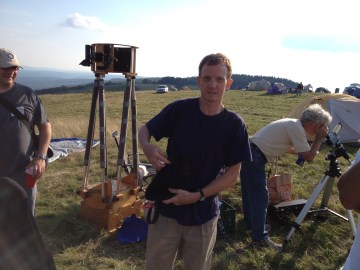
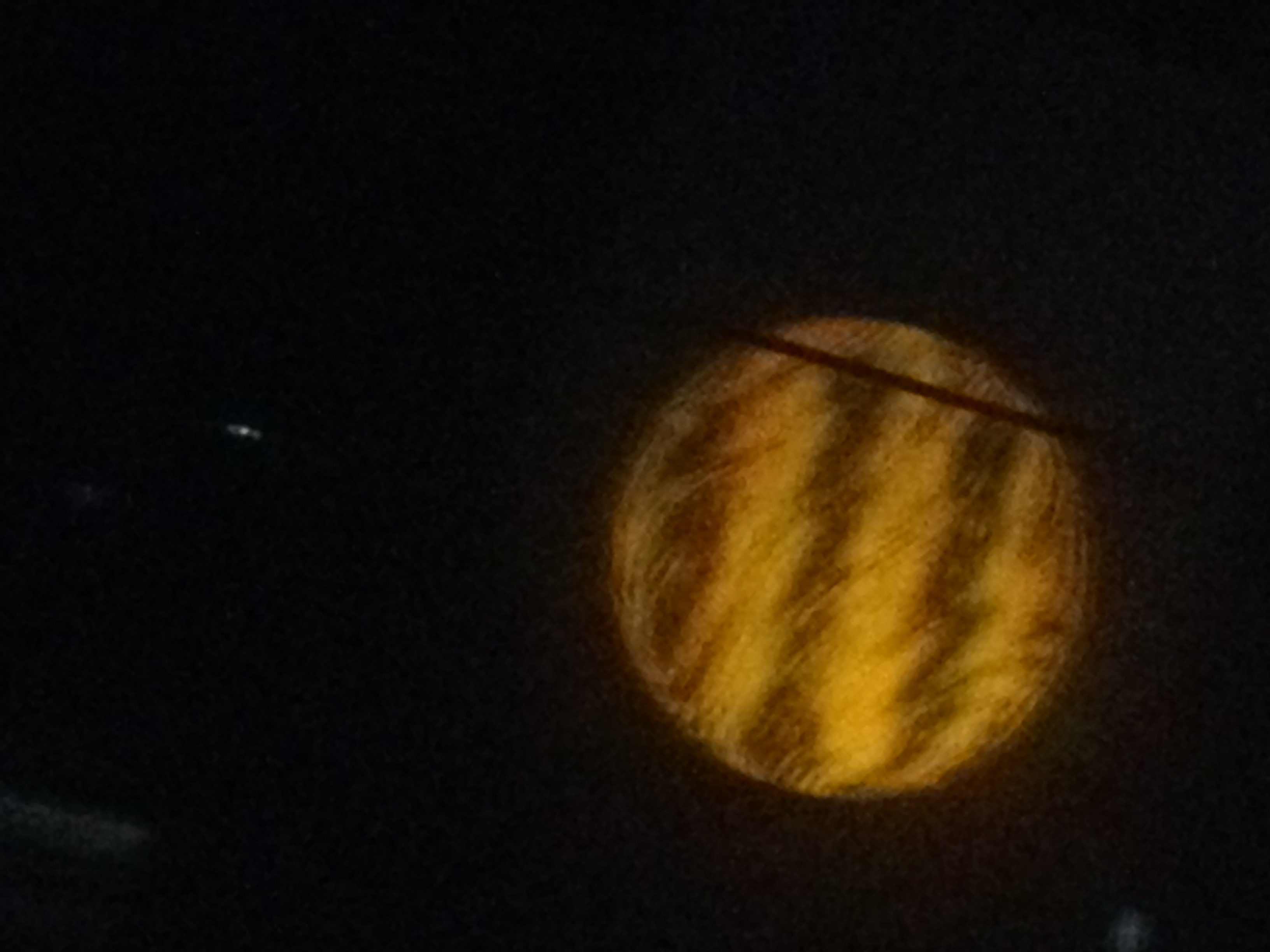
Assuming good weather, you’ll get to see planets, star clusters and nebulae and the Milky Way itself, as well as many other galaxies. If you like, you can bring a picnic dinner and a blanket or folding chairs, and/or your own telescope, if you own one and feel like carrying it. We have outside 120VAC power, if you need it for your telescope drive, but you will need your own extension cord and plug strip. If you want to camp out or otherwise stay until dawn, feel free!
Warning: While we do have bottled drinking water (and will have hot water and the makings for tea, cocoa & coffee) and we do have hand sanitizer, we do not have running water; and, our “toilet” is of the composting variety. Plus, you may want to consider bug spray, since we are completely surrounded and protected by woods. Do check carefully for ticks when you get home. If you do apply insect repellent while visiting, please keep the spray downwind from anybody’s telescopes!!
The road up here is partly paved, and partly gravel or dirt. It’s suitable for any car except those with really low clearance, so leave your fancy sports car (if any) at home. Consider car-pooling, because we don’t have huge parking lots. We will have signs up at various places along the way to help guide you, and will try to have parking spaces denoted.
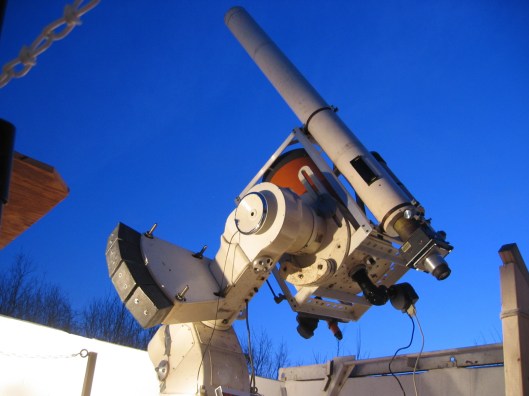
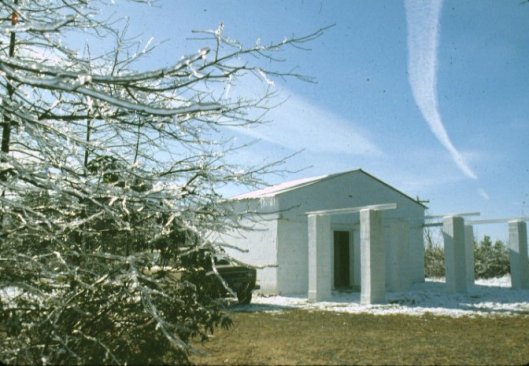
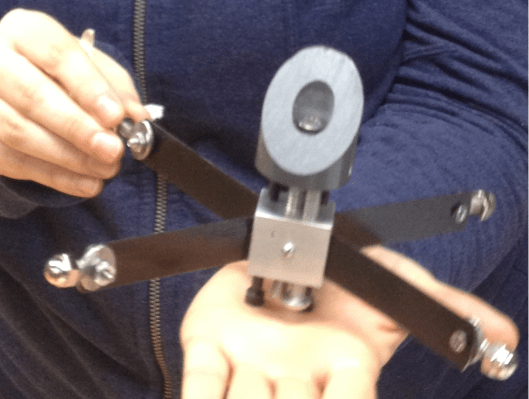
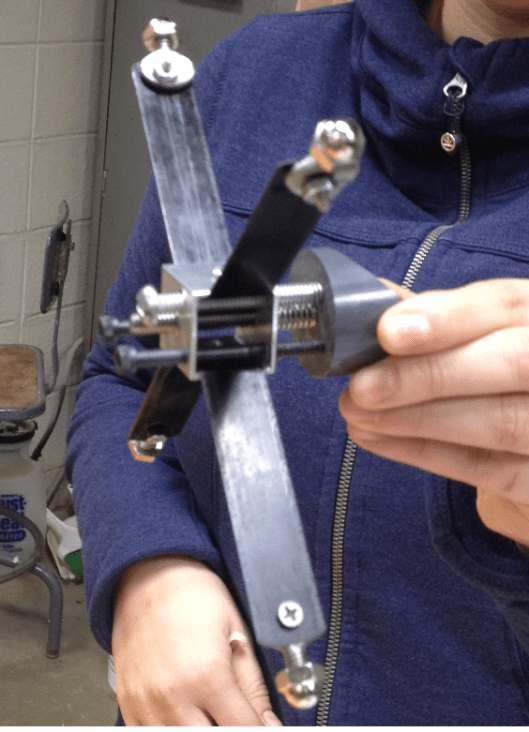
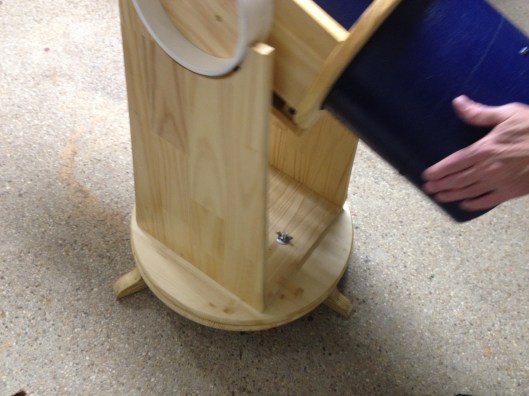
Two of our telescope mounts are permanently installed in the observatory under a roll-off roof. We have others that we roll out onto the grass in our roughly one-seventh-acre field. We have two 14-inch scopes (one hand-made Dob and one Celestron SCT), 10” f/9 reflecting scope also made by hand. The entire observatory was hand-built, and is maintained, by the labor of its founders and current members.
The drive is about an hour from DC. After parking at a cell-phone tower installation, you will need to hike about 100 yards to our observatory. Physically handicapped people, and any telescopes, can be dropped off at the observatory itself, and then the vehicle will need to go back to park near that tower. To look through some of the various telescopes you will need to climb some stairs or ladders, so keep that in mind when making your plans.
It’s not the inky-scary dark of the Chilean Atacama or the Rockies, but Hopewell Observatory is mostly surrounded by nature preserves maintained by the Bull Run Mountain Conservancy and other such agencies. Also, our Prince William and Fauquier neighbors and officials have done a pretty good job of insisting on smart lighting in the new developments around Haymarket and Gainesville, which benefits everybody. So, while there is a pretty bright eastern horizon because of DC and its VA suburbs, we can still see the Milky Way whenever it’s clear and moonless.
We should also be able to track down and examine many, many deep-sky objects, including the famous Andromeda galaxy and the Orion nebula.
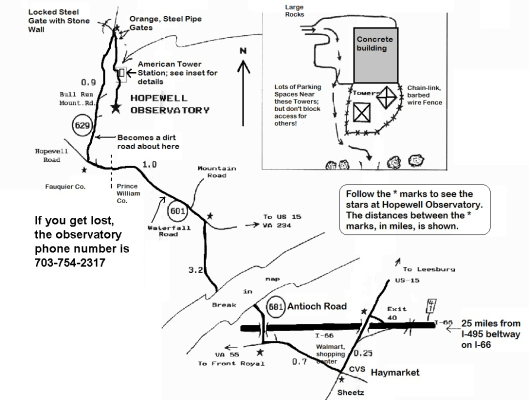
You can find detailed directions and a map to the observatory below:
DIRECTIONS TO HOPEWELL OBSERVATORY:
[Note: if you have a GPS navigation app, then you can simply ask it to take you to 3804 Bull Run Mountain Road, The Plains, VA. That will get you to step 6, below.]
(1) From the Beltway, take I-66 west about 25 miles to US 15 (Exit 40) at Haymarket. At the light at the end of the ramp, turn left/south onto US 15. (Exit is at approximately latitude 38°49’00″N, longitude 77°38’15″W.)
(2) Go 0.25 mi; at the second light turn right/west onto VA Rt. 55. There is a Sheetz gas station & convenience store at this intersection, along with a CVS, a McDonald’s, and a Walmart-anchored shopping center on the NW corner. This is a good place to stop for restrooms or supplies.
(3) After 0.7 mi on Va 55, turn right (north) onto Antioch Rd., Rt. 681. You will pass entrances for Boy Scouts’ Camp Snyder and the Winery at La Grange. (38°49’12″N, 77°39’29″W)
(4) Follow Antioch Rd. to its end (3.2 mi), then turn left (west) onto Waterfall Rd. (Rt. 601), which will become Hopewell Rd. (38°51’32″N, 77°41’10″W)
(5) After 1.0 mi, bear right onto Bull Run Mountain Rd., Rt. 629 (this is beyond Mountain Rd.). This will be the third road on the right, after Mountain Rd. and Donna Marie Ct. (38°52’00″N, 77°42’08″W) Please note that Google Earth and Google Maps show a non-existent road, actually a power line, in between Donna Marie Ct. and Bull Run Mtn. Rd.
(6) In 0.9 mi, enter the driveway on the right, with the orange pipe gate. There is a locked stone and metal gate on the left, opposite our entrance, labeled 3804 Bull Run Mountain Road. Don’t take that road – it goes to an FAA radar dome. Instead, go to the right (east). We’ll have some signs up. This is a very sharp right hand turn. (38°52’36″N, 77°41’55″W)
(7) Follow the narrow paved road up the ridge to the cell phone tower station. You should park around the tower (any side is fine) or in the grassy area before the wooden sawhorse barrier. Then you should walk the remaining hundred meters to the observatory on foot. Be sure NOT to block the right-of-way for automobiles.
(8) If you are dropping off a scope or a handicapped person, move the wooden barrier out of the way temporarily, and drive along the grassy track to the right of the station, into the woods, continuing south, through (or around) a white metal bar gate. The few parking places among the trees near our operations cabin, the small house-like structure in the woods, are reserved for Observatory members. If you are dropping off a handicapped person or a telescope, please do so and then drive your car back and park near the cell phone tower.
Please watch out for pedestrians, especially children! The observatory itself is in the clearing a short distance ahead. We do not have streetlights, and there will not be any Moon to light your way, so a flashlight is a good idea. In the operations cabin we have a supply of red translucent plastic film and tape and rubber bands so that you can filter out everything but red wavelengths on your flashlight. This will help preserve everybody’s night vision. In the cabin we also have a visitor sign-in book; a supply of hot water; the makings of hot cocoa, tea, and instant coffee; hand sanitizer; as well as paper towels, plastic cups and spoons.
The location of the observatory is approximately latitude 38°52’12″N, longitude 77°41’54″W. The drive takes about 45 minutes from the Beltway. A map to the site follows. If you get lost, you can call me on my cell phone at 202 dash 262 dash 4274.