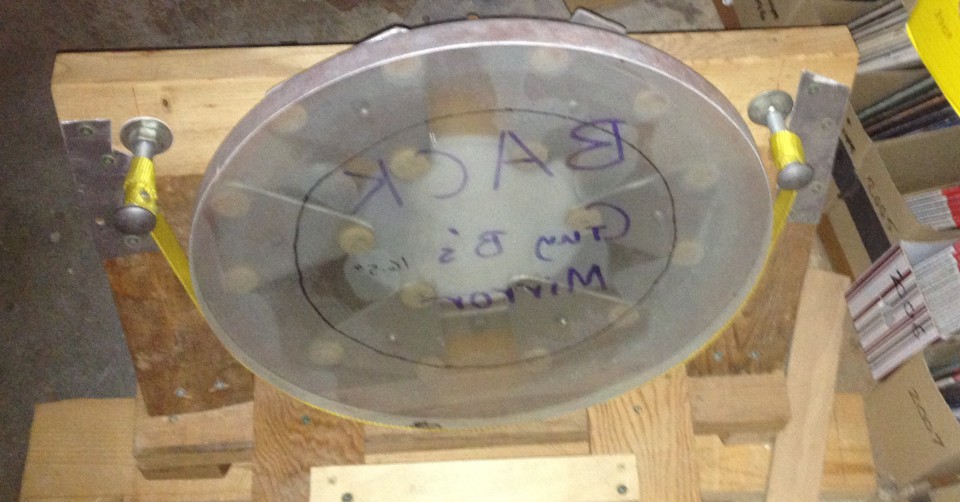
• My series on making a Newtonian telescope
  • How Leon Foucault Made Telescopes

Guy's Math & Astro Blog

Guy's Math & Astro Blog

Category Archives: Optics

DIY Spectroheliograph by Prasad Agrahar

06 Saturday Dec 2025

Posted by gfbrandenburg in astronomy, astrophysics, education, monochromatic, Optics, Safety, science, Telescope Making

≈ Leave a comment

Tags

angstroms, astronomy, ATM, h-alpha, h-beta, hydrogen alpha, Mirror, nanometers, National Capital Astronomers, Optics, refractor, solar, solar imaging, solar system, spectroheliograph, spectrum, sun, Telescope, Telescope Making

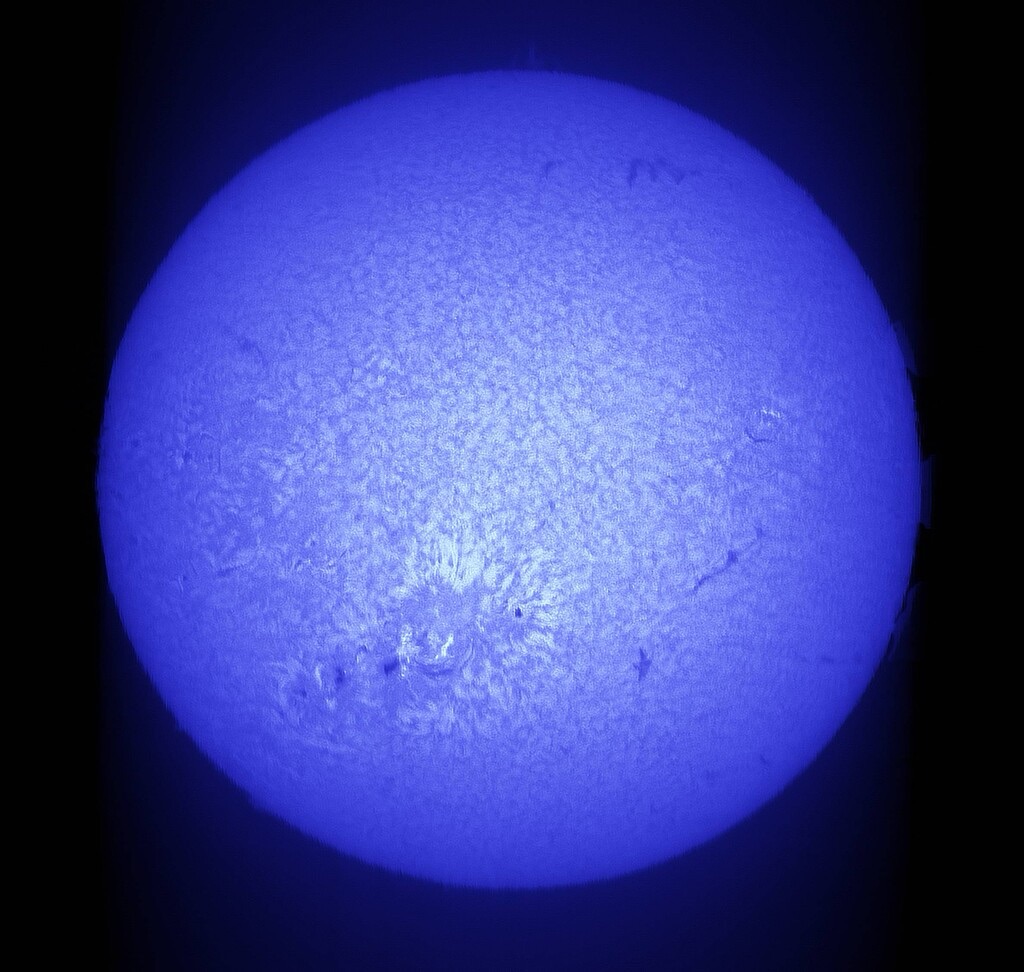
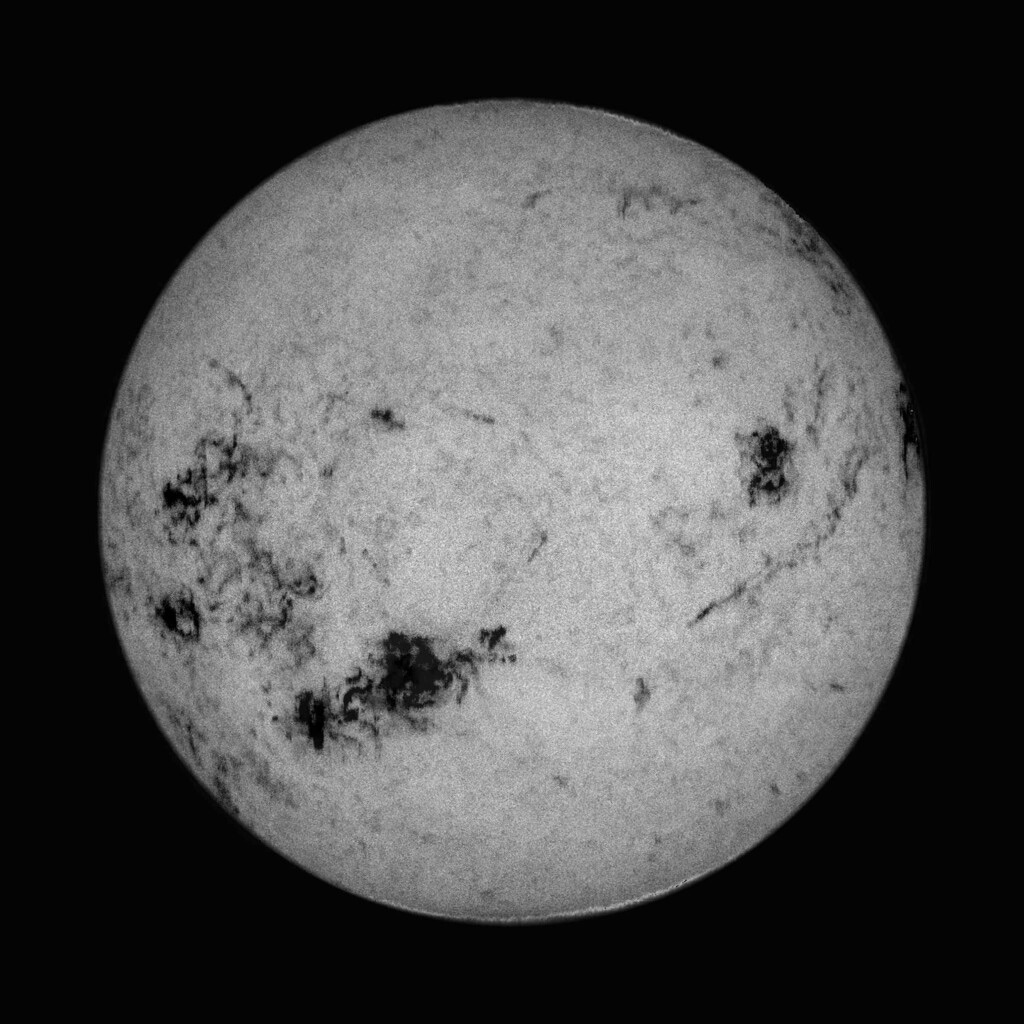
I’d like to share these spectacular images of our Sun, taken by Prasad Agrahar with his home-made spectroheliograph. 

His first image is at H-alpha (656 nm), second is at H-beta (486 nm), and the third is at Helium D3 (585 nm).

With this device, IIUC, he can make an image at just about any wavelength that makes it through the front lens of the optics. He posted this to the NCA email list.

DIY!!

Guy Brandenburg

Prasad wrote:

Here are three images of our Sun, taken on Thursday morning with my DIY spectroheliograph. The weather was quite windy, and the seeing was poor. 

The above is H-alpha with [sunspot groups] AR 4294 and 4296 dazzling. 

This is H-beta

And finally, 

The above image is (…) Helium-D3, the emission line at 5875A.

Thank you all.

Prasad

_._,_._,_


Variable star measurements with a Seestar

02 Tuesday Dec 2025

Posted by gfbrandenburg in astronomy, Math, Optics, science

≈ Leave a comment

Tags

astronomy, Math, Optics, RRLyrae, Seestar, space, Telescope, variable stars

Most (but not all) of the variable stars I tried over the past month or so were simply too bright for this sensor. The target stars were saturated (ie some of the pixels’ electron wells simply  overflowed) despite using the shortest available exposure, adding the light pollution filter and refocusing. Seestar won’t let your change the ISO nor open the shutter for less than 10 seconds.

I did get some believable light curves on BE Lyncis (aka HD67390)and U Cephii (aka HD 5679). I attack some graphs I made.

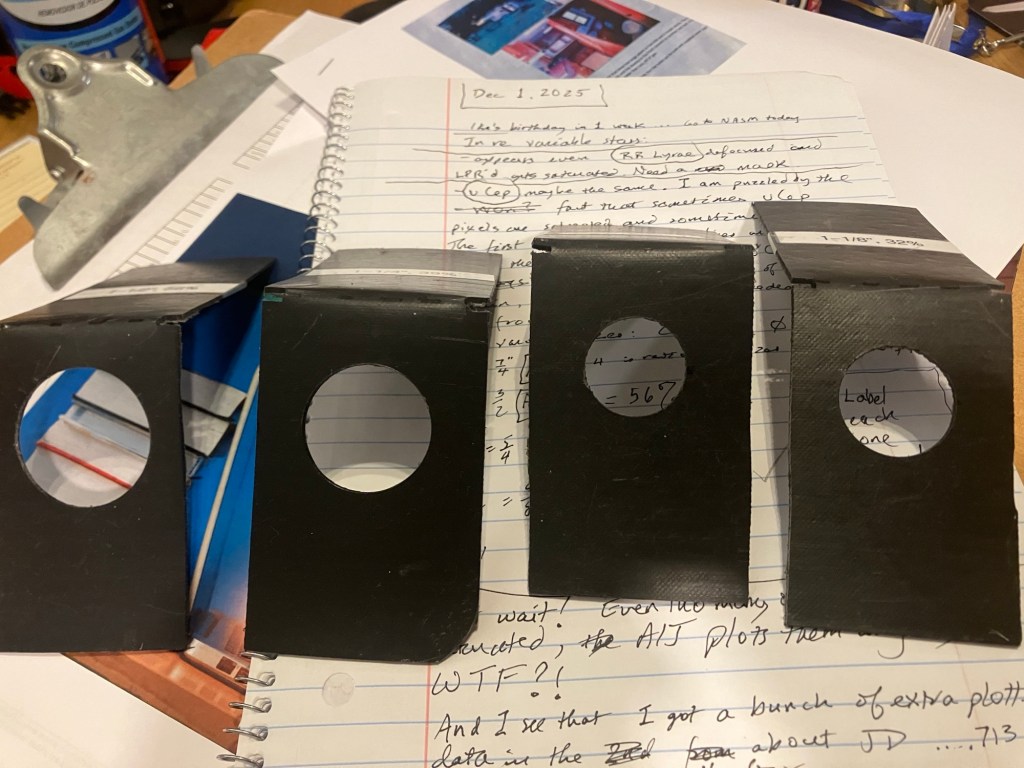
I used some black plastic I had,and my set of Forster bits, to make holes of sizes 1”, 1-1/8”, 1-1/4”, and 1-1/2”, in case I want to try brighter variable stars again like RR Lyrae. 

I very impressed that Seestar absolutely nails the locations of every single one of these targets! I’m also pleased that AstroImageJ allows quick and easy plate-solving! 

Yes, Defocus!

18 Tuesday Nov 2025

Posted by gfbrandenburg in astronomy, astrophysics, History, Hopewell Observatorry, Math, Optics, Uncategorized

≈ Leave a comment

Tags

Hopewell Observatory, light curve, Math, photometry, saturation, Seestar, Telescope, variable star

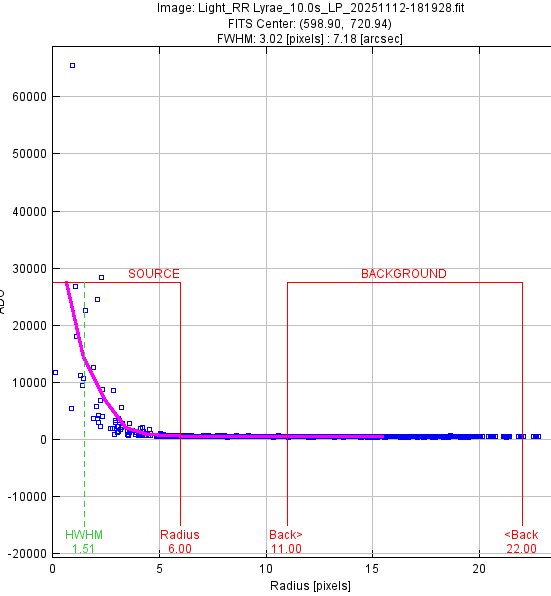
This graph gives me confidence that defocusing will solve my overflow problem. It’s a profile of the number of photons/electrons captured (vertical axis) versus the distance from what I thought was the exact center of the star RR Lyrae aka HD 182989.

(It is amazing how fast the computer works this out! I’m used to my middle school or high school students working things out like this by hand at first — it’s a very slow and tedious process! Let us give a tip of the hat to Williamina Fleming, who was the first person to notice and record that RR Lyrae was a variable star. She did so by examining glass plates on which were little dark spots made by stars’ light striking particles of suspended silver nitrate, without a blink comparator! Wow!)

Notice that there is one

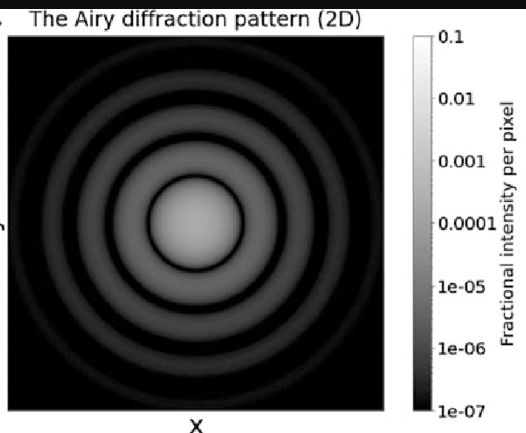
If I defocus the camera a bit, that saturated value would get spread out over an airy disk that might look like this:

Still Overexposed, and No Auroras for Me

14 Friday Nov 2025

Posted by gfbrandenburg in astronomy, astrophysics, Hopewell Observatorry, Optics, science

≈ Leave a comment

Tags

astronomy, Aurora, cold, Hopewell Observatory, norothern lights, Optics, RR Lyrae, RRLyr, RRLyrae, Seestar, Telescope, variable star

I went up to Hopewell on Wednesday night, and practiced once again taking images of RRLyrae with my Seestar S50, but this time with the built-in light-pollution rejection filter in place. I figured that would reduce the number of photons by a lot, and maybe by enough to stop overwhelming the pixels.

Unfortunately, it was not sufficient, so, since I cannot reduce the number of seconds of exposure for each sub-image (or ‘slice’ as AstroImageJ calls them) below 10, and I cannot change the ISO or gain for the chip, the only choices left are, in order of ease of implementation:

  1. De-focus the images to spread the photons into a wider range of pixels, hopefully not causing any of them to become saturated, but not so much as to confuse the plate-solving app;
  2. Make a black, circular mask smaller than 50 mm in diameter and put it in front of the lens, reducing the total number of photons;
  3. Persuade the engineers and programmers at ZWO to change the software to allow users to reduce the length of exposures, and to allow time lapse photography with what they call Star-Gazing but everybody else calls deep-space observing.

Number 1 I will do next time.

By the way, the exact mechanism by which this variable star dims and brightens is still not fully understood, though its timing cycle is extremely regular and quite well known.

No Auroras for me:

It was very cold and windy so I couldn’t stand being outside up on the Bull Run Mountain ridge for very long at a time. The sky was almost perfectly clear the entire night, and the beautiful winter constellations were extremely bright, and it was fun watching them make that apparent great pivot around us.

I saw no auroras; since I was was groggy (from forgetting my meds) and quite cold, so I spent most of the night inside napping and trying to get warm, but went out from time to time to look around and to check on the progress of my little Seestar. So when the peak happened I was probably dozing. Not too many other folks saw it, apparently, and the images I’ve seen were not nearly as impressive as for other aurorae on other dates. Oh, well.

Overexposed!

12 Wednesday Nov 2025

Posted by gfbrandenburg in astronomy, astrophysics, Hopewell Observatorry, monochromatic, Optics, science

≈ Leave a comment

Tags

astronomy, ATM, filter, Hopewell Observatory, light pollution, Optics, photometry, RR Lyrae, RRLyrae, Seestar, Seestar s50, Telescope

As described in my last post, I got a light curve for a known variable star in my little Seestar S50 a few weeks ago that showed absolutely no variability whatsoever over a roughly 4 hour period. Since this star’s variation occurs extremely regularly, there is a known formula that will give you the precise location in its cycle if you feed in the Julian day (JD). I plugged the start and end times for my run, and got the following:

And was confused

So RRLyrae should have dropped from something near 7.3 magnitude to around 7.6 magnitude, which is a LOT for this sort of thing. But my graph of brightness of RRLyae, compared to a nearby star of roughly the same magnitude, looks like this:

Which is barely any change at all. The few pairs of dots below the blue blob line are glitchy data that should be ignored; notice that it happens for both stars. In fact, I see more variability in the pink comparison star’s brightness than I do with RRRLyrae.

Was the scope indeed pointed at the correct star? Well, I had plate solving on each and every frame, and they all agreed, so, yes.

I did notice a problem with saturation, but didn’t know exactly by how much. Nikolaos Bafitis suggested that I use my mouse to look more closely at the centers of the star images themselves in AstroImageJ. I did so, and at last noticed that one of the boxes held the number of pixel counts right under my mouse pointer. Duh! Sure enough, my target star, RR Lyrae, had a count of 65,533, which is 2^16, and (I looked it up) that is precisely the maximum for these pixels on these CMOS cameras. So that’s why RR Lyrae’s brightness was so steady: it was always OVERFLOWING.

So I have to figure out a way to gather fewer photons per pixel around the target and comparison stars. There are several possible ways of doing so without changing the electronics or trying to mess with the operating system or user interface.

  1. Reduce the ISO setting from the current default value.
  2. Shorten the exposure time.
  3. Change the focal ratio by placing a circular mask over the lens aperture.
  4. De-focus the images so that the light is spread out over a larger area.
  5. Add some sort of filter.

Unfortunately right now, the Seestar doesn’t allow you to do either number 1 or number 2. It would be nice if ZWO engineers would add those capabilities in the ‘advanced’ menu,

Number 3 is quite doable. I happen to have on hand a large roll of black Kydex plastic and a set of Forstner bits to make nice holes with. But it this would require a fair amount of time and effort. It would also reduce the resolution of an already rather small 50mm lens.

Number 4 is more easily doable: turn off the autofocus feature and do some experimentation to find a good fixed de-focus point. However, if the stars are too fuzzy, then plate-solving becomes much harder and slower.

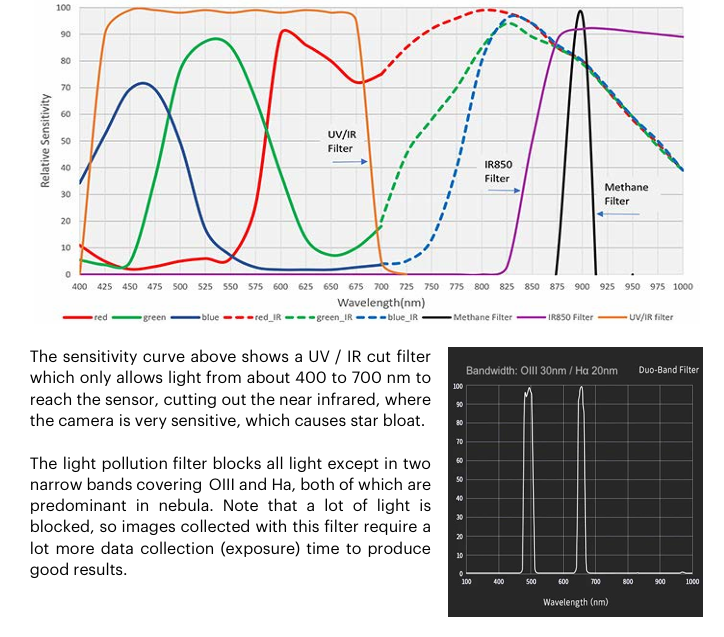
Number 5 can be done by using the built-in light pollution filter, whose transmission bandwidth is very small. It’s the bottom graphic below.

The graphics above come from an excellent Unofficial Seestar handbook written by Tom Harnish. He has a number of suggestions that I hope the engineers at ZWO pay attention to and follow.

The option that seems easiest is number 5, using the light pollution filter. If I couple that with the built-in time-lapse feature, I won’t fill the Seestar’s entire memory with a zillion FITS images.

I hope to try this tonight up at Hopewell Observatory, where I can set this up, have it run all night connected to mains power, and I can sleep in a nice warm cabin.

And maybe get lucky and see Northern Lights!

I Suck at Astrophotography

07 Friday Nov 2025

Posted by gfbrandenburg in astronomy, astrophysics, History, Hopewell Observatorry, Optics, science

≈ Leave a comment

Tags

astronomy, Hopewell Observatory, RRLyrae, Telescope, variable stars

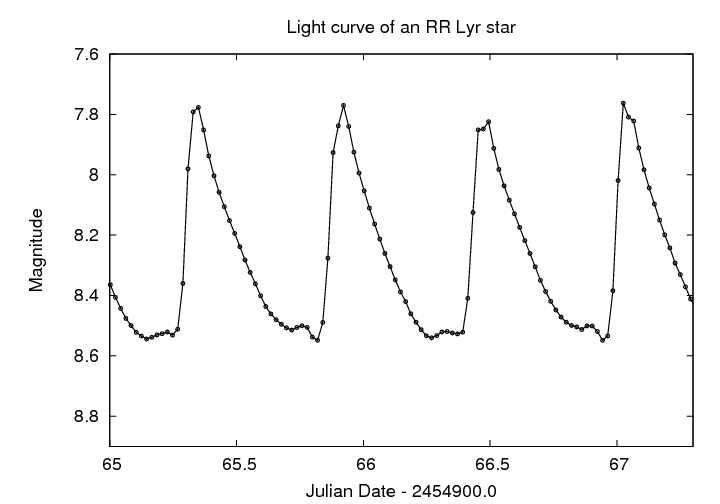
I’m still struggling to do simple astronometry even on a well-known variable star like RRLyrae. If you could measure its brightness for several nights without any breaks, you should in theory get a light curve like this:

I don’t. I’m still trying to figure out why my light curve for RRLyrae is so flat.

In 2004, during a two-week astronomy summer class at Mount Wilson, with a professional astronomer on hand guiding me at every step of the way over a couple of nights, I got light curves looking like pieces of the good example above. (Why only pieces? Because you can’t image a star in the daytime or when it’s cloudy or if the star is on the other side of our planet!)

A couple of weeks or so ago, inspired by an exoplanet light curve taken by a 9th grader with a Seestar, I had the opportunity to run my tiny automated Seestar S50 for 8 hours outside at Hopewell Observatory, which is a nice, safe location, connected to wall power. The weather was perfect for it. The scope is about the size of a large cookie tin on a tripod. It did nothing but take ten-second photos of a small region around RRLyrae from whenever stars came out until dawn.

Afterwards I then had to start analyzing those 972 images. My first step was to learn how to use YET ANOTHER astro-imaging package, called AstroImageJ. It’s quite impressive, but It pisses me off that every few years I have to learn an entirely new piece of software, and just throw out nearly everything I learned regarding anything software-related over the past 60 years!

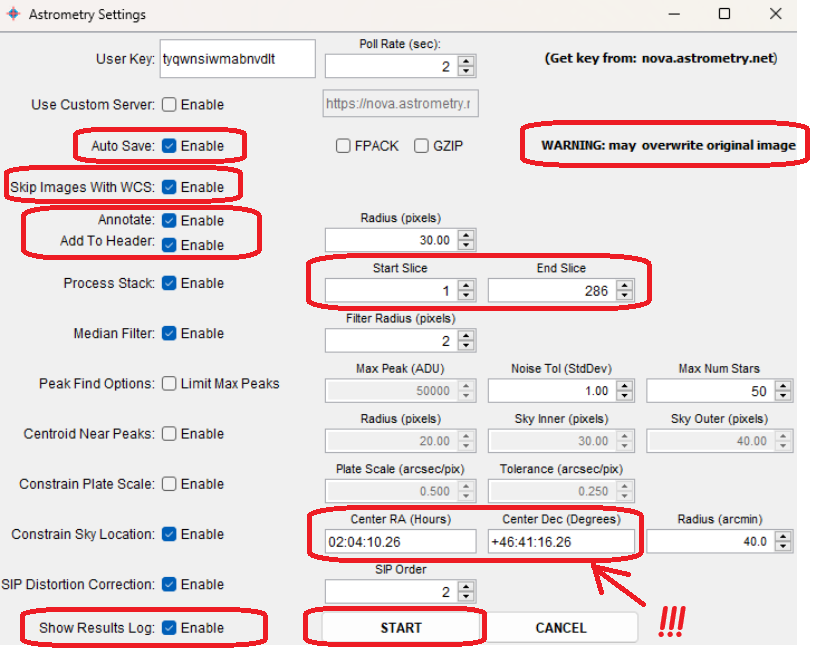
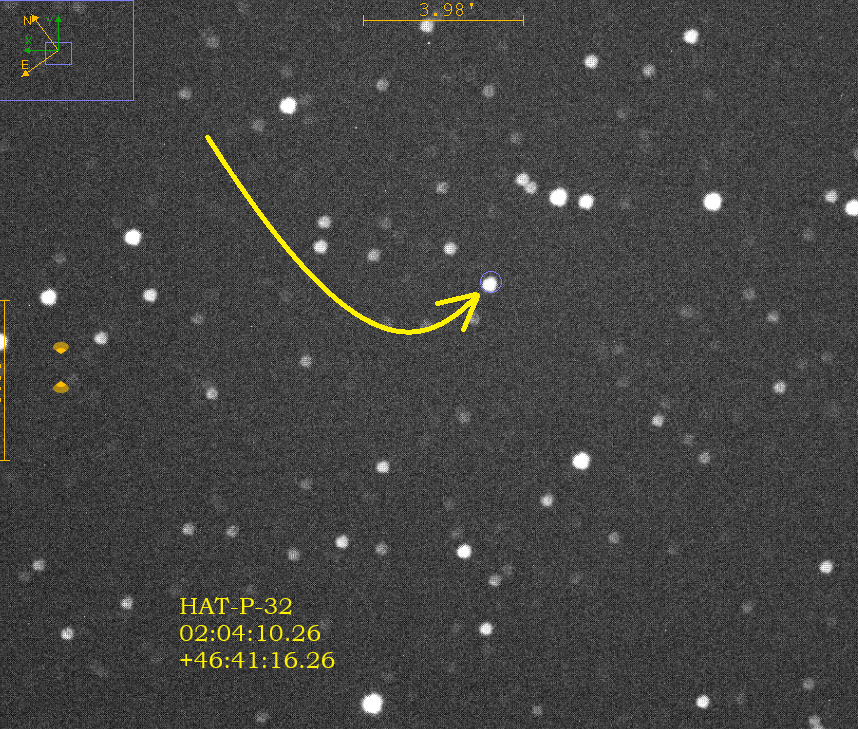
I eventually figured out how to get AIJ to verify that the little scope was in fact looking at my chosen star — and it was.

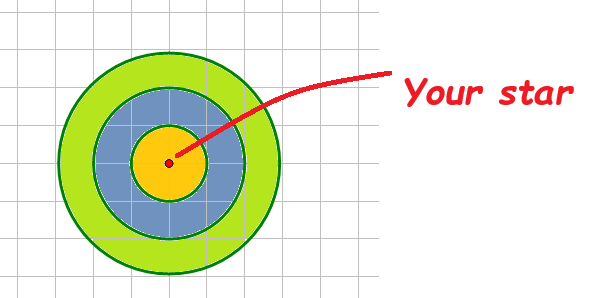
I then asked AIJ to compare the brightness of RRLyrae to the brightness of five or six other stars of similar brightness that happened to be located in the same field of view, for each image. (Today’s computers quickly do all sorts of math on the values of certain pixels in certain rings around certain stars, at lightning speeds, but the human computer of 1899, Williamina Fleming, who discovered this star, had to do it completely manually by comparing the size of the spots on a glass photographic plate. My hat is off to you, Ms Fleming, and all the other unsung female computers!

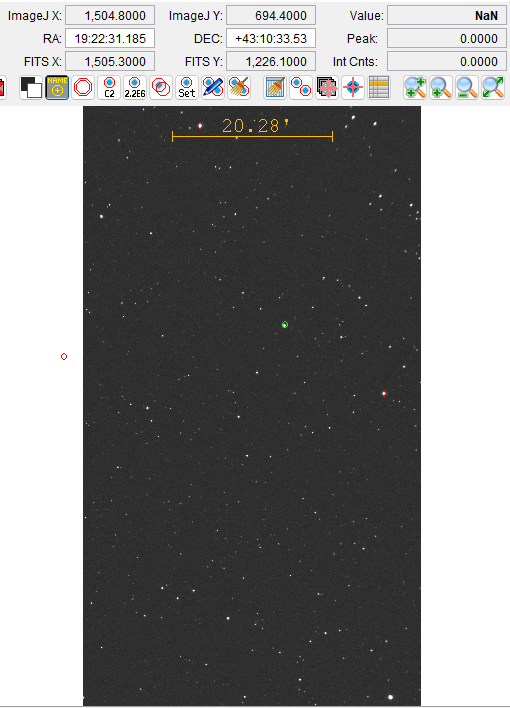
Here is a screenshot of the very last image in the series I took. The RA and Dec are the coordinates of RRLyrae, which AIJ has circled in green. The stars circled in red are comparison stars. That 20.28′ legend is in arc-minutes, 60 of which equal one degree. So the field of view is a bit over half a degree across and roughly a degree vertically.

To my surprise, my results were totally different from what I expected to find.

The blue dots are RRLyrae’s brightness on some scale that the computer cooked up, and the pink ones are from one of the known comparison stars. The x-axis goes from roughly 0.48 to 0.64, or 0.16, which is 1/6 of a day, or 4 hours.

The cases where both the blue and pink dots drop down below 1.0 are garbage caused by some glitch and should be ignored. But one thing is for sure: there is no sawtooth spike in my data for RRLyrae’s brightness during those 8 or 9 hours!

Four possible reasons are:

  1. I’ve made a great scientific discovery! (probably not correct)

2. Wrong star? (I don’t think so. Checked and re-checked)

3. Perhaps those 8 hours happened to correspond to a flat place in the light curve (Possible — I just noticed that these images end before midnight, but I thought it kept working until dawn! Must re-check!)

4. The pixels all are too saturated, ie were exposed for too long,, which fills up the pixel with too many electrons. (This is possible, I guess, but each of these were merely 10 second-long exposures, which doesn’t sound very long to me, but maybe I’m missing something important).

Saturation is what the following graphic seems to indicate:

If it is indeed saturation that is making all the stars not change brightness, then what do I do?

I don’t think I can control the gain or ISO inside SeeStar, but I can ask for shorter time exposures, I think, by trying a time lapse and asking for shorter exposures, if possible. I just need to have time and a location to let it run all night without anybody disturbing it, making a time lapse of the sky.

How to make a spectroscope – cheap!

04 Friday Jul 2025

Posted by gfbrandenburg in astronomy, astrophysics, education, Optics, Telescope Making

≈ Leave a comment

Tags

cheap, grating, sidewalk astronomy, spectroscope

Making a spectroscopeDownload

Some surprises with new astro gizmos

24 Friday Jan 2025

Posted by gfbrandenburg in astronomy, education, Optics, Telescope Making

≈ 1 Comment

Tags

astronomy, Astrophotography, ATM, celestron, dobsonian, Optics, science, space, StarSense, Telescope, testing

Astronomy is moving so fast, it’s amazing.

We only truly discovered the nature of galaxies, of nuclear fusion, and of the scale of the universe a mere century ago.

Dark matter was discovered by Vera Rubin just over 40 years ago and dark energy a few years later, just before the time that both professional and amateur astronomers began switching over to CCD and later CMOS sensors instead of film

The first exoplanet was discovered only 30 years ago, and the count is now up to almost six thousand of them (as of 1/21/2024).

While multi-billion dollar space telescopes and giant observatories at places like Mauna Kea and the Atacama produce the big discoveries, amateur astronomers with a not-outrageous budget can now afford to purchase relatively small rigs armed with excellent optics and complete computer control, and lots of patience and hard work, can and so produce amazing images like the ones here https://www.novac.com/wp/observing/member-images/ or this one https://www.instagram.com/gaelsastroportrait?igsh=cjMzYWlqYjNzaDlw, by one of the interns on this project. Gael’s patience, cleverness, dedication and follow-through are all praiseworthy.

However, it is getting harder and harder every year for people to see anything other than the brightest planets, because of ever-increasing light pollution; the vast majority of the people in any of the major population centers on any continent have no hope of seeing the Milky Way from their homes unless there is a wide-spread power outage. Here in the US, such power outages are rare, which means that if you want to go out and find a Messier object, you pretty much cannot star-hop, because you can only see four to ten stars in the entire sky!

One choice is to buy a completely computer-controlled SCT like the ones sold by Celestron. They aren’t cheap, but they will find objects for you.

But what if you don’t want another telescope, but instead want to give nice big Dobsonian telescope the ability to find things easily, using the capabilities inside one’s cell phone?

Some very smart folks have been working on this, and have come up with some interesting solutions. When they work, they are wonderful, but they sometimes fail for reasons not fully understood. I guess it has something to do with the settings in the cell phone being used.

The rest of this will be on one such solution, a commercial one called StarSense from Celestron that holds your phone in a fixed position above a little mirror, and you aim the telescope and your cell phone’s camera at something like the top of a tower far away. Then it uses both the interior sensors on your cell phone and images of the sky to figure out where in the sky your scope is pointing, and tells you which way to push it to get to your desired target.

When it works, it’s great. But it sometimes fails.

You have to buy an entire set from Celestron – one of their telescopes (which has the gizmo built in) along with the license code to unlock the software.

You supply the cell phone.

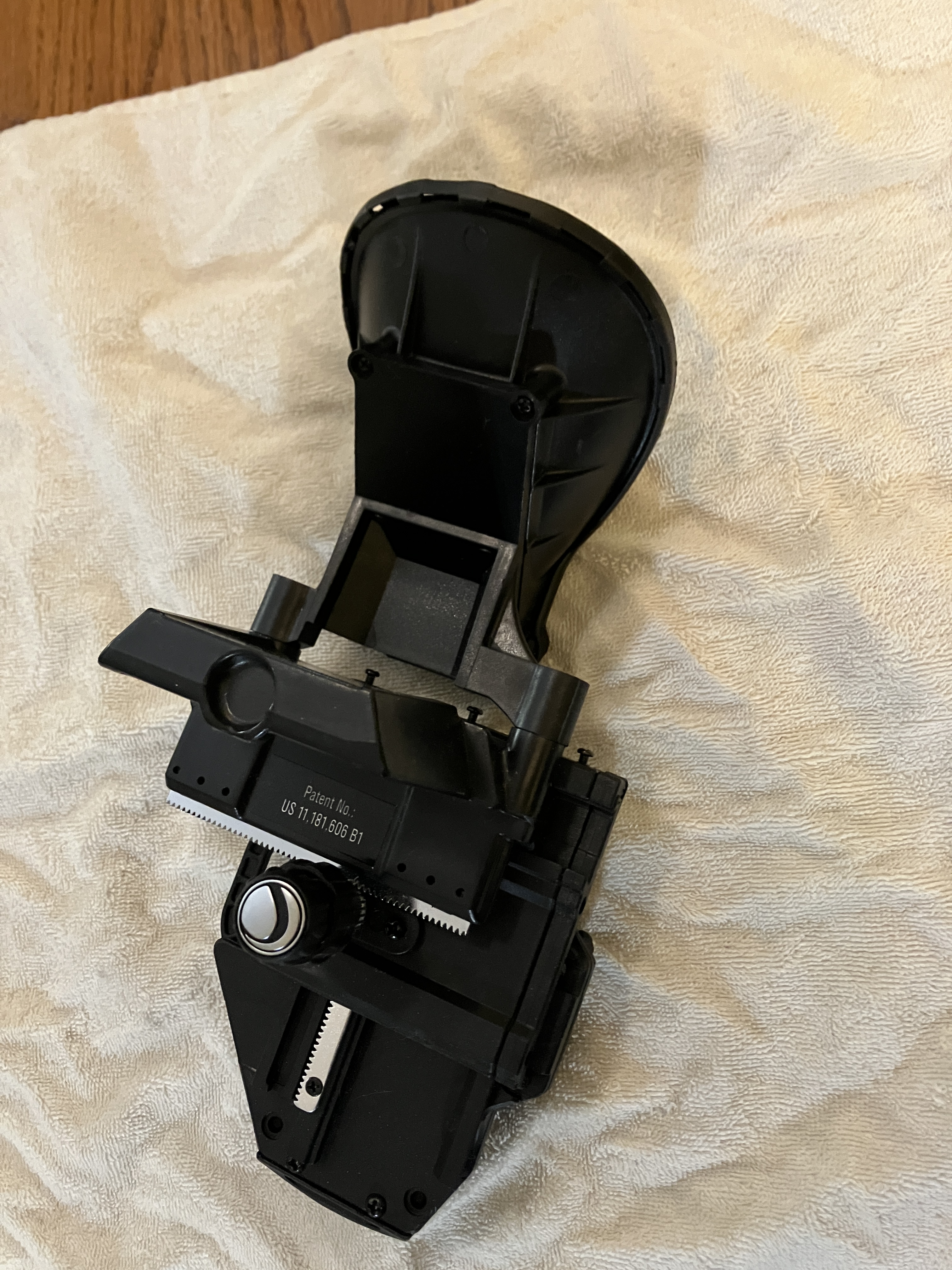
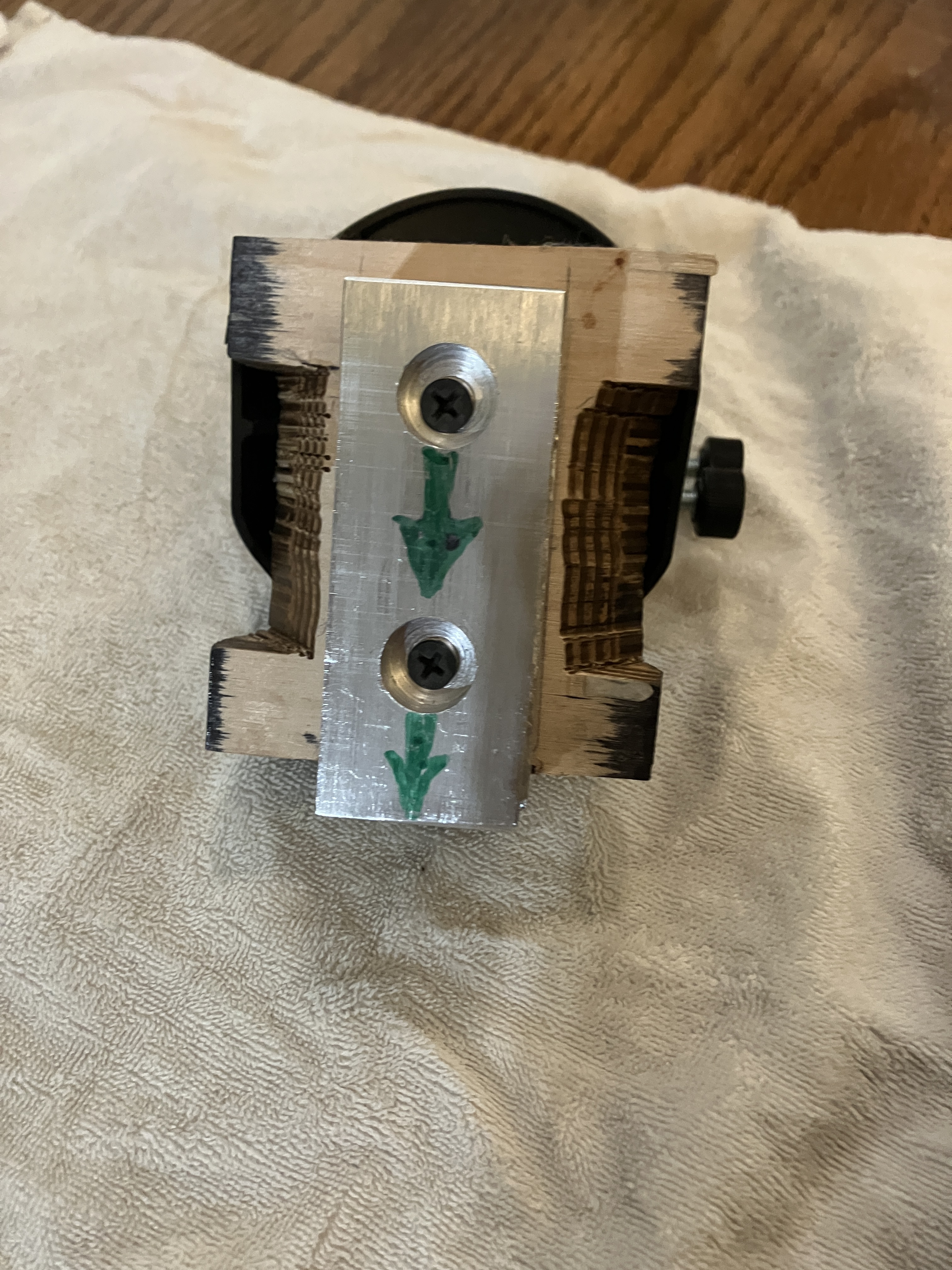
The entire setup ranges in price from about $200 to about $2,000. You cannot just buy the holder and the code from them; you must buy a telescope too. I already had decent telescopes, which I had made, so I bought the lowest-priced one. I then unscrewed the plastic gizmo, and carved and machined connection to a male dovetail slide for it. I also fastened a corresponding female dovetail to each of my scopes. The idea was to then slip this device off or onto whichever one of my telescopes is going to get used that night, as long as I that has a vixen dovetail saddle, and put inexpensive saddles on several scopes I have access to.

Here are some photos of the gizmo:

NCA’s current interns (Nabek Ababiya and Gael Gomez) and I were wondering about the geometry of the angles at which StarSense would aim at the sky in front of the scope. My guess had been that Celestron’s engineers would make the angles of their device so that the center of the optical pencil hitting the lens dead-on at 90 degrees, and hence coning to a focus at the central pixel of the CMOS sensor, would be parallel to the axis of the telescope tube.

We didn’t want to touch the mirror, because it’s quite delicate. But as a former geometry teacher, I couldn’t leave this one alone, so along with Gael and Nabek I made some diagrams and figured out what the angles had to be if the axis of the StarSense app’s image were designed to be precisely parallel to the axis of the telescope.

In my diagram below, L is the location of the Lens, and IJCK is the cell phone lying snug in its holder. The user can slide the cell phone left and right along that line JD as we see it here, or into out of the plane of the page, but it is not possible to change angle D aka <CDE – it’s fixed by the factory molds to be some fixed angle that we measured with various devices to be 19.0 degrees.

Here is a version of the diagrams we made that showed what we predicted all the angles would be so that optical axis OH will be parallel to the tube axis EBD, and that lens angle ILH is a right angle. We predicted that the mirror’s axis would need to be tilted upwards by an angle of 35.5 degrees (anle HBD).

To our surprise, our guesses and calculations were all wrong!

After careful measurements we found that Celestron’s engineers apparently decided that the optical axis of the SS gizmo should instead aim the cell phone’s camera up by 15.0 degrees (angle BGH below). The only parallel lines are the sides of the telescope tube!

We used a variety of devices to measure angle FBD and MNC to an accuracy of about half a degree; all angles turned out to be whole numbers.

Be that as it may, sometimes it works well and sometimes it does not.

Zach Gleiberman and I tested it on an open field in Rock Creek Park here in DC back in the fall of 2024, using the Hechinger-blue 8 inch dob I made 30 years ago and still use. We found that SS worked quite well, pointing us quite accurately to all sorts of targets using my iPhone SE. The sky was about as good as it gets inside the Beltway, and the device worked flawlessly.

Not too long afterwards, I decided to try out an Android-style phone (a REVVL 6 Pro) so that I wouldn’t have to give up my cell phone for the entire evening at Hopewell Observatory. I was unpleasantly surprised to find that it didn’t work well at all: the directions were very far off. I thought it might be because the scope in question had a rather wide plywood ring around the front of its very long tube, and that perhaps too much of the field of view was being cut off?

Why it fails was not originally clear. I thought nearly every modern phone would work, since for Androids, it just needs to be later than 2016 and have a camera, an accelerometer, and gyros, which is a pretty low bar these days. However, my REVVL 6 Pro from T-Mobile is not on the list of phones that have been tested to work!

Part of my assumption that the axis of the SS gizmo would be parallel to the axis of the scope was an explanation that StarSense on had such a large obstruction in front of the SS holder, in the form of a wide wooden disk reinforcing the front of a 10″ f/9 Newtonian, that the SS was missing part of the sky. We now know that’s not correct. It’s an interface problem (ie software) problem.

We think.

Success with digital measurement of parabolic telescope mirrors

02 Saturday Nov 2024

Posted by gfbrandenburg in astronomy, astrophysics, Math, Optics, science, Telescope Making

≈ Leave a comment

Tags

astronomy, ATM, data, FigureXP, foucault, measurement, millies-lacroix, paraboloid, Telescope

Alan Tarica, Pratik Tambe, Tom Crone and I have been pulling our hair out for a couple of years, trying to use cameras and software to measure the ‘figure’ of the telescope mirrors that we and others produce in our telescope-making class.

There has been progress, and there has been frustration.

I think we finally succeeded!

Some of the difficulties have been described in previous posts. In brief, we want our mirrors to be really, really close to a perfect paraboloid. There are many ways of doing those measurements and seeing whether one is close enough, but none of those methods are easy!

(By the way, one needs the entire mirror to be within one-tenth of a wave-length of green light of that ideal paraboloid! That’s extremely tiny, and equivalent to the thickness of a pencil over a ten-mile diameter!)

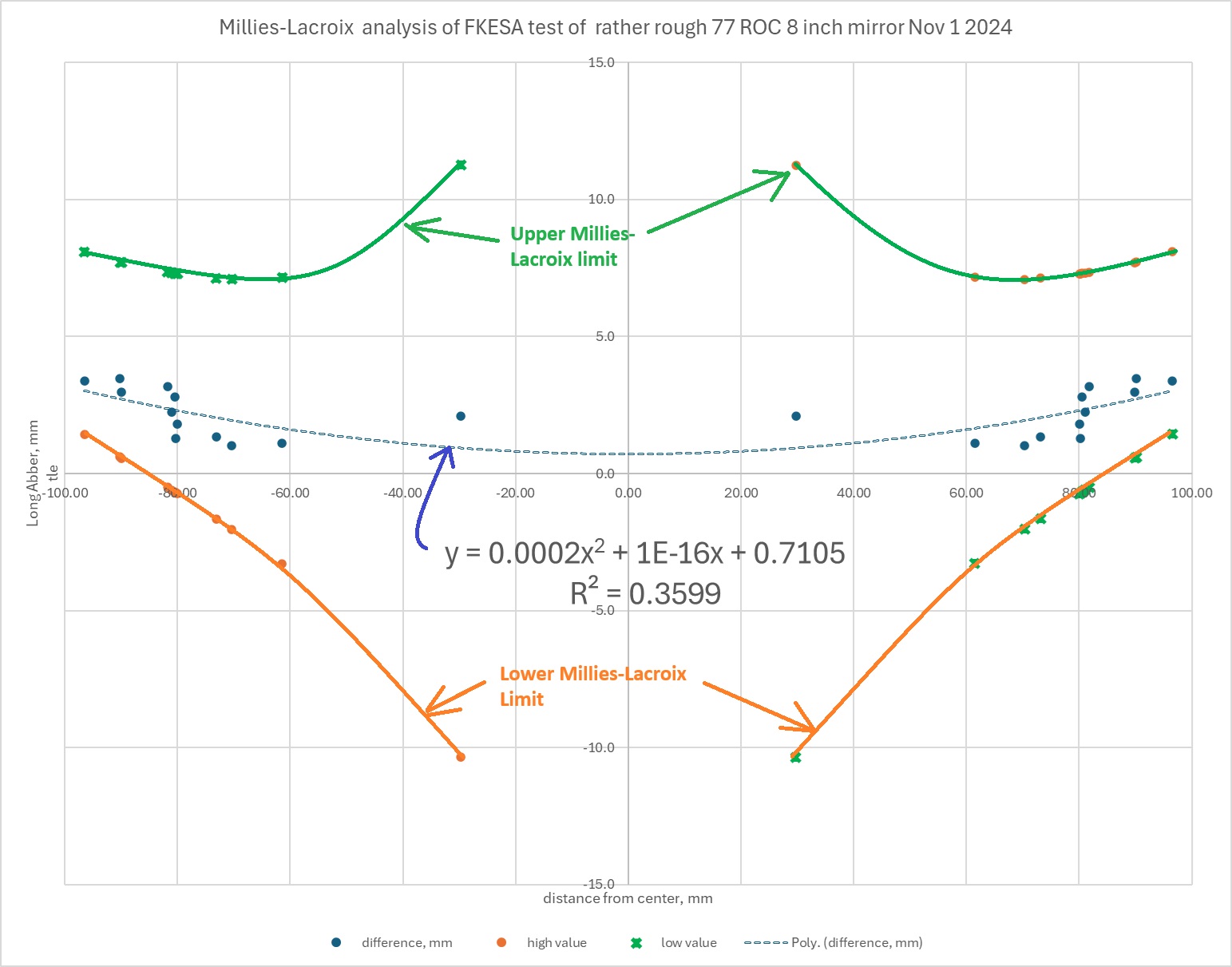
I think I can finally report a victory. My evidence is this graph that I made just now, using data that Alan and I gathered last night with our setup, which consists of a surveillance camera coupled to an old 35mm SLR film camera lens, which is mounted on a linear actuator screw connected to a stepper motor controlled by an Arduino and a Python app developed by Pratik.

Something seemed to be always a bit — or a lot — ‘off’.

Until today, when I converted everything to millimeters and used the criterion set out by Adrien Millies-Lacroix in an article he wrote in Sky & Telescope back in 1976.

The blue dots just above the x-axis are the measurements for this one particular mirror with a diameter of 8″ and a radius of curvature of 77 inches.

The dotted blue curve in the middle of the image is the best-fit parabola for those dots. Notice that the R-squared value (variance) for that curve is not great: 0.3599.

But that variance isn’t important. What is important is the green and orange blobs and curves above and below the blue ones.

The green and orange curves are the upper and lower allowable limits for the measurements of this particular mirror, using the

Clearly, the blue dots are all well within the green and orange curves.

Which means that this mirror is sufficiently parabolized.

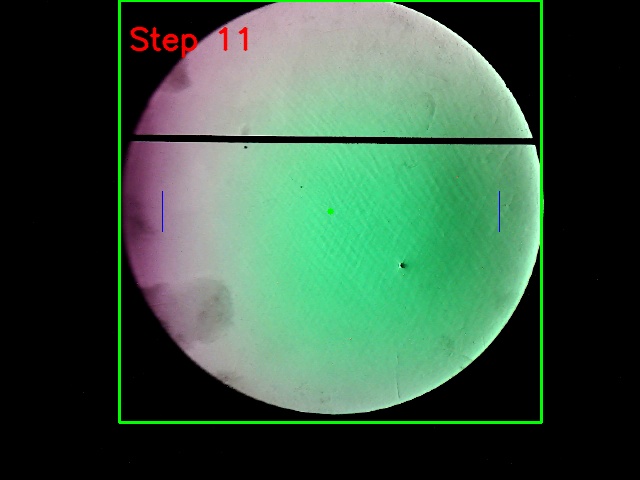
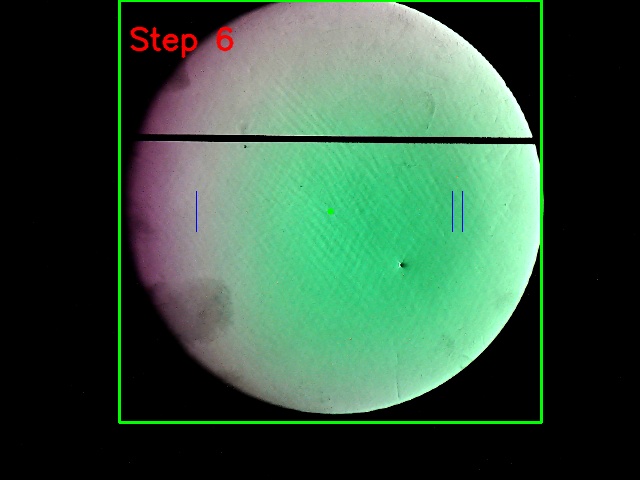
The fact that the blue dots don’t fit the dotted line perfectly, and behave pretty oddly at positive or negative 80 millimeters, both agree with the fact that we can see on the photos that the surface of this mirror is rather rough, as you can see in the images below. Note also that the image labeled ‘Step 6’ found not one, but two null zones on the right, indicated by two vertical blue lines.

So, finally, we have an algorithm that gives good measurements! What I still want to do is to automate all the spreadsheet calculations that I just did today. Perhaps we can upload them to something like FigureXP by Dave Rowe and James Lerch.

Thanks very much to all those who have helped, whom I should look up and name here.

Caveat: This method can give really ridiculous measurements close to the center and close to the edge.

PS: if anybody wants the raw data, just email me at gfbrandenburg at gmail dot com.

Free Open House at Hopewell Observatory in Northern Virginia, October 26 or 27

16 Wednesday Oct 2024

Posted by gfbrandenburg in astronomy, Hopewell Observatorry, Optics, Safety, science, Telescope Making

≈ Leave a comment

Tags

astronomy, dobsonian, Hopewell Observatory, observatory, OnStep, space, Telescope

Come to Bull Run Mountain for a free night under the stars looking at a variety of targets using the telescopes at the Hopewell Observatory on Saturday, October 26, 2024. If it’s cloudy, we will try again on the next evening, Sunday the 27th.

You are invited, but will need to RSVP and, in this litigious age, must agree to a waiver of liability for anything that might happen up there, like tripping over rocks and trees. The waiver also includes detailed driving directions.

Click here for the RSVP form: 

But if you take the risk you can view, for free, Venus, Saturn and its rings, Jupiter and its moons, Uranus, Neptune, the current comet Atlas, the Milky Way, and a whole bunch of nebulae, galaxies, Messier objects, and beautiful double stars.

We suggest arriving near sundown, which will happen near 6:15 PM. It will get truly dark about an hour later. You can stay until midnight, if you like.

There are no street lights near our observatory, other than some dimly illuminated temporary signs we put along the path, so you will probably want to bring a flashlight of some sort. In the operations cabin we have a supply of red translucent plastic film and tape and rubber bands so that you can filter out everything but red wavelengths on your flashlight. This will help preserve everybody’s night vision.

Hopewell is located on the first ridge of the Appalachian mountain chain that you see as you drive west from the DC beltway, near Haymarket. Our elevation is about 1100 feet, and we have much less of a problem with dew than other observing spots in northern Virginia. The last two miles of road are dirt and gravel, and you will need to walk about 200 meters/yards from where you park. Some parts of the road are pretty rough, so don’t drive anything with low clearance underneath. Our parking spaces are pretty limited, so consider car-pooling if possible. Handicapped persons or telescopes can be dropped off at the observatory.

We do have electricity, and a heated cabin, but since we have no running water, we use bottled water, hand sanitizer, and a pretty nice outhouse. We will have the makings for tea, coffee, and hot cocoa in that cabin.

If you like, you can bring a picnic dinner and a blanket or folding chairs, and/or your own telescope or binoculars, if you own one and feel like bringing them. We have outside 120VAC power, if you need it for your telescope drive.

At this time of year, the bothersome insects have mostly gone dormant, but feel free to use your favorite bug repellent, (we have some). Remember to check yourself for ticks after you get home.

We have a variety of permanently-mounted and portable telescopes of different designs, some commercial and some made by us. Two of our telescope mounts are permanently installed in the observatory under a roll-off roof. One of the mounts is a high-end Astro-Physics mount with a 14” Schmidt-Cassegrain and a 5” triplet refractor. The other mount was manufactured about 50 years ago by a firm called Ealing, but the motors and guidance system were recently completely re-done by us with modern electronics using a system called OnStep. We didn’t spend much cash on it, but it took us almost a year to solve a bunch of mysteries of involving integrated circuits, soldering, torque, gearing, currents, voltages, resistors, transistors, stepper drivers, and much else. We could not have completed this build without a lot of help from Arlen Raasch, Prasad Agrahar, Ken Hunter, and the online “OnStep” community.

We also have two home-made Dobsonian telescopes (10″ and 14″ apertures) that we roll out onto our lawn, and have been lent a pair of big binoculars on a parallelogram mount.

The location of the observatory is approximately latitude 38°52’12″N, longitude 77°41’54″W.

Click here for the RSVP form to get detailed directions. You must sign the waiver to visit. If we cancel on Saturday the 26th because of bad weather, we will notify you by email and will try again on Sunday the 27th.

← Older posts

Subscribe

  • Entries (RSS)
  • Comments (RSS)

Archives

  • December 2025
  • November 2025
  • October 2025
  • September 2025
  • July 2025
  • January 2025
  • November 2024
  • October 2024
  • August 2024
  • July 2024
  • May 2024
  • April 2024
  • January 2024
  • December 2023
  • October 2023
  • August 2023
  • June 2023
  • May 2023
  • April 2023
  • November 2022
  • October 2022
  • August 2022
  • July 2022
  • June 2022
  • May 2022
  • April 2022
  • February 2022
  • January 2022
  • December 2021
  • October 2021
  • September 2021
  • August 2021
  • July 2021
  • June 2021
  • May 2021
  • March 2021
  • December 2020
  • October 2020
  • September 2020
  • August 2020
  • March 2020
  • February 2020
  • January 2020
  • December 2019
  • November 2019
  • September 2019
  • August 2019
  • June 2019
  • May 2019
  • January 2019
  • November 2018
  • October 2018
  • September 2018
  • August 2018
  • May 2018
  • March 2018
  • January 2018
  • November 2017
  • October 2017
  • September 2017
  • August 2017
  • July 2017
  • June 2017
  • May 2017
  • April 2017
  • February 2017
  • December 2016
  • September 2016
  • June 2016
  • May 2016
  • April 2016
  • March 2016
  • February 2016
  • January 2016
  • December 2015
  • November 2015
  • August 2015
  • July 2015
  • April 2015
  • March 2015
  • February 2015
  • January 2015
  • December 2014

Categories

  • astronomy
  • astrophysics
  • education
  • flat
  • History
  • Hopewell Observatorry
  • Math
  • monochromatic
  • nature
  • optical flat
  • Optics
  • Safety
  • science
  • teaching
  • Telescope Making
  • Uncategorized

Meta

  • Create account
  • Log in

Blog at WordPress.com.

  • Subscribe Subscribed
    • Guy's Math & Astro Blog
    • Join 53 other subscribers
    • Already have a WordPress.com account? Log in now.
    • Guy's Math & Astro Blog
    • Subscribe Subscribed
    • Sign up
    • Log in
    • Report this content
    • View site in Reader
    • Manage subscriptions
    • Collapse this bar
 

Loading Comments...