• My series on making a Newtonian telescope
  • How Leon Foucault Made Telescopes

Guy's Math & Astro Blog

Guy's Math & Astro Blog

Category Archives: astronomy

Telescope Fix, Scudding Clouds Over Moon, Tom Turkeys Hiding, and Successful Cloud Chamber!

12 Monday Dec 2016

Posted by gfbrandenburg in astronomy, astrophysics, science, Telescope Making, Uncategorized

≈ Leave a comment

Tags

cloud chamber, Digital Setting Circles, dry ice, Isopropanol, Moon, Sky Wizard, Turkeys

I had a productive 24 hours!

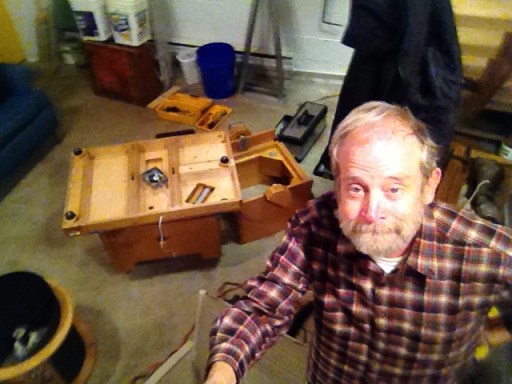
  • Night before last, I think I finally got Sky Wizard Digital Setting Circles installed on the 14″ alt-az telescope we were most generously donated by Alan Bromborsky. (That’s me, in the operations cabin  at Hopewell Observatory, taking a break and a picture, long before completion.)img_6169
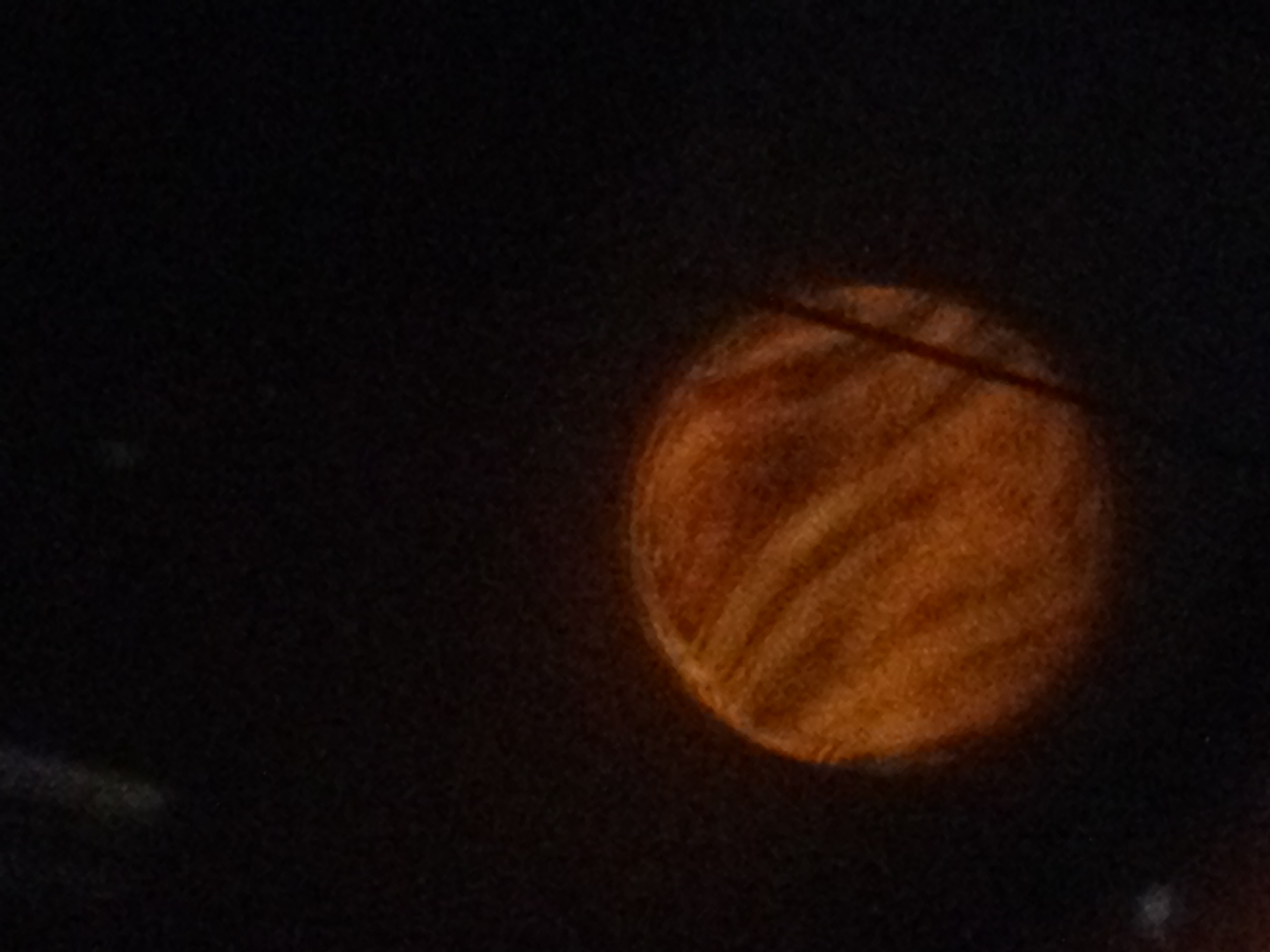
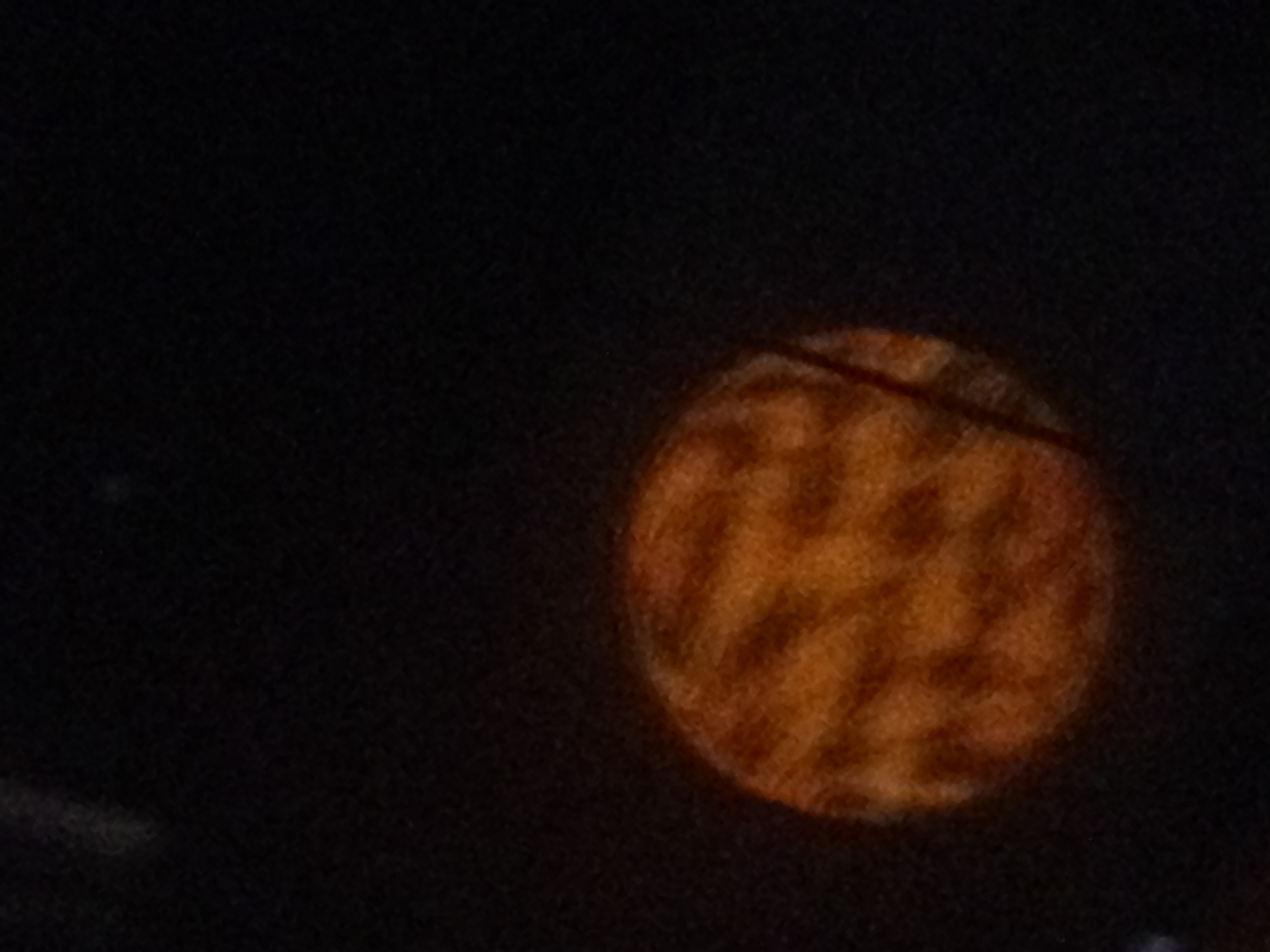
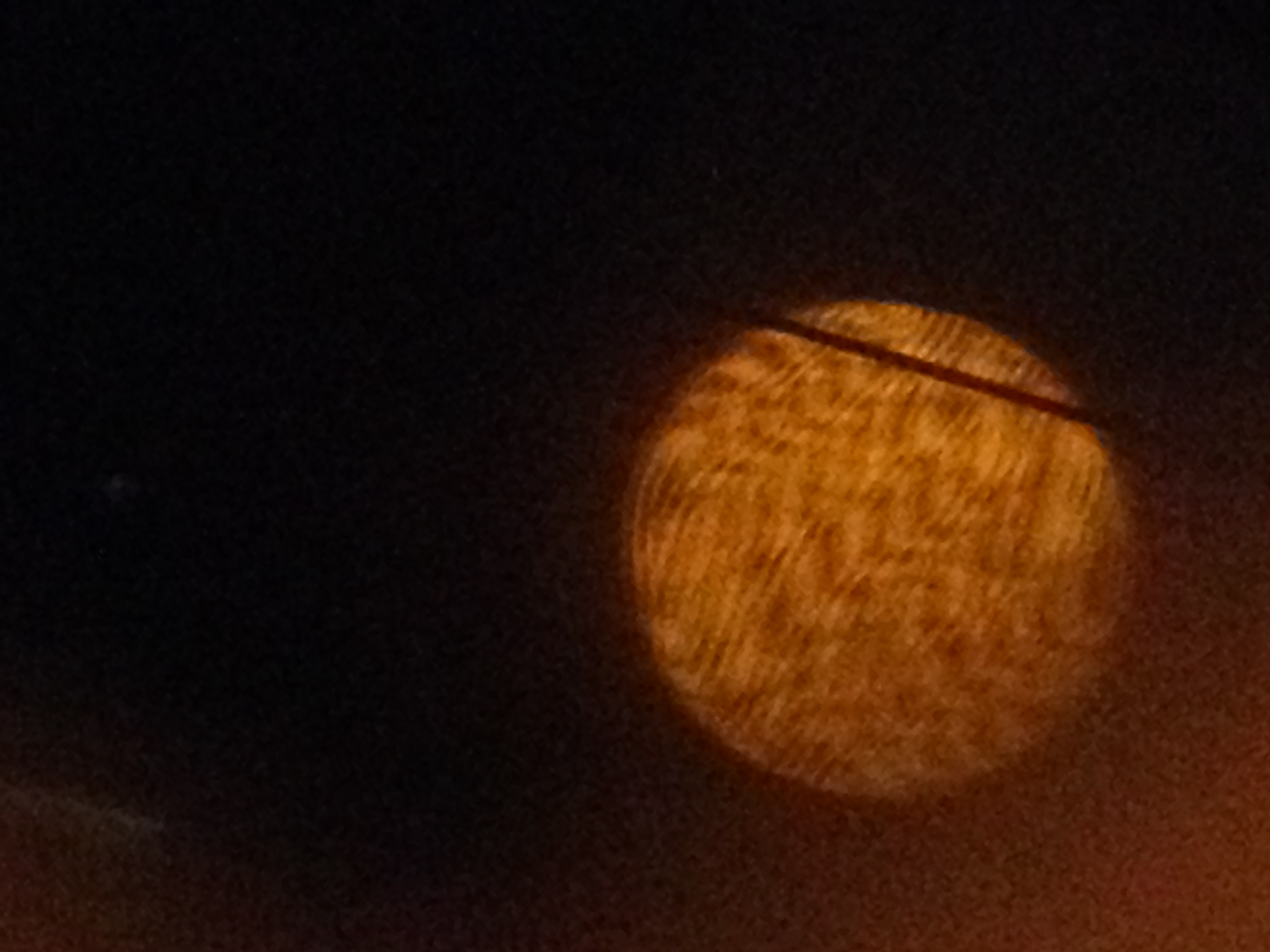
  • So I went out to look at the sky at 1 AM. I saw no stars, but the 80% gibbous moon appeared to race dramatically through the clouds
  •  That afternoon, as I was driving out, I saw 5, maybe 6 tom turkeys playing hide-and-seek with me behind the trees. Believe me, they are REALLY GOOD at hiding behind little saplings, logs, and rocks! Or if you don’t believe me, ask anyone who’s tried to hunt them.
  •  Late that evening, I got a dry-ice-and-isopropanol particle detector working for the first time. (I had tried and failed, when I was a teenager, some 50 years ago, and failed several other times since then as well.) If you look at my little video, you can see the particles more easily than I could with your naked eye as I was filming it. Don’t ask me yet which ones are muons, which are alpha particles, and which are beta particles, because I don’t know yet. But you could look it up!

Productive 24 hours!

A Talk at AHSP on Telescope Making

16 Friday Sep 2016

Posted by gfbrandenburg in astronomy, History, Telescope Making

≈ Leave a comment

Tags

AHSP, Almost Heaven Star Party, Charles Messier, Messier Objects, NOVAC, Spruce Knob, West Virginia

Two weeks ago was the Almost Heaven Star Party on the slopes of Spruce Knob, West Virginia, sponsored and organized by the Northern Virginia Astronomy Club (NOVAC). The weather was wonderful, and we could see the Milky Way and lots of Messier objects with our naked eyes, every single night for four nights. This is by far the longest stretch of good weather I’ve ever experienced up there at The Mountain Institute.

(Friday and Saturday, it was only clear for a few hours, but Sunday and Monday nights were clear all night, AND there was NO DEW to speak of!! Wow!!)

During the daytime, there were lots of talks and also activities and expeditions such as hiking, spelunking, visiting the National Radio Astronomy Observatory at Green Bank, canoeing, and Phun With Physics and arts & crafts for kids. I particularly enjoyed the talks on Russell Porter (the founder of amateur telescope making in the US and one of the major designers of the 200-inch telescope at Palomar), LIGO (detection of gravity waves), and Rod Molisse’s talk on 50 years of mostly-commercial telescopes as seen in the pages of various astronomy regime.

I was one of the speakers and gave a little talk on telescope-making. If you care to sit through it, you can find it along with all of the other talks (many of which I missed for various reasons) at this web-page.

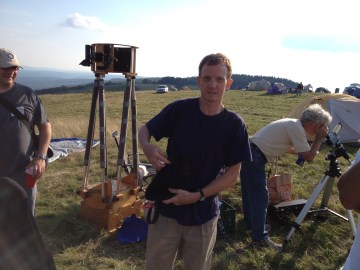
I brought my home-made 12.5″ Dob-Newt [shown to the left in the picture below] and added about a dozen items to my formal list of Messier objects. (I had already seen all 100+ objects, but hadn’t recorded enough details on them to be able to earn one of the ‘merit badge’ pins from the Astronomical League, so I’m going through the list again

.img_0198

(If you didn’t know: Charles Messier loved hunting comets about 220 years ago, with what we would consider today to be a fairly small (4″ diameter) refractor that he used from downtown Paris, not far from where I lived back in 1959. Comets look like fuzzy patches in the sky, and so do galaxies, star clusters, and illuminated clouds of gas, all of which are MUCH farther away and MUCH larger. Comets are part of our own solar system, and move noticeably from one night to the next against the apparently fixed background of stars. Messier is credited with discovering 13 comets. But when he discovered a fuzzy item in the sky that did NOT move, he would record its location and its appearance, so as to avoid looking at it again. He published and updated this list a few times before he died, 199 years ago. Nowadays, his list of things-to-be-avoided are some of the most amazing and beautiful things you can see in the night sky. I’ve tried imaging a few of them, but am very, very far from being proficient at it. I attach my best one so far, of something called the Dumbbell Nebula. No, it’s not named after me. And thanks to Mike Laugherty for helping with the color balance!)

dumbbell-processed-november-1-2015

When was the last time you spent a night under the stars?

29 Wednesday Jun 2016

Posted by gfbrandenburg in astronomy, astrophysics, Hopewell Observatorry, Telescope Making

≈ Leave a comment

Tags

astronomy, Hopewell Observatory, open house, Telescope

If it’s been a while since you spent time looking up at the heavens with your naked eyes, binoculars and telescopes, looking at planets, stars and galaxies, then this Saturday might be your night.

The Hopewell Observatory is having an open house on Saturday, July 2, 2016, and we have a variety of scopes to look through. Some of the scopes will be under our roll-off roof and some will be rolled out onto the small lawn outside the observatory itself.

Mars, Jupiter and Saturn will be very conveniently placed for viewing right at sundown, and if it’s dry and clear enough, we should be able to see the Milky Way. Many nebulae, open and globular clusters, galaxies, and double or triple stars will be visible as well.

You are invited!  And it’s free!

The location is about an hour due west of Washington DC by way of I-66, near the town of Haymarket, VA. For detailed directions, follow this link, which I posted for one of the dates which got canceled because of bad weather. Ignore the date, but do pay attention to the fact that we have no running water! We have bottled water and a composting toilet and hand sanitizer. Plus makings for coffee, tea, and hot chocolate – all gratis.

picture of hopewell

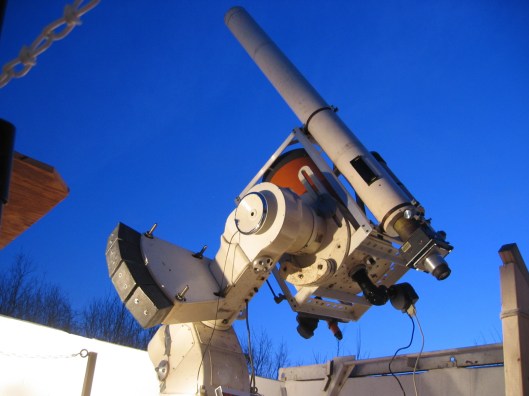
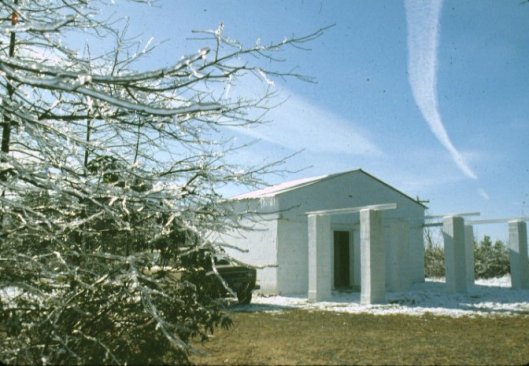
The picture above is of one of our telescope mounts, which carries several telescopes and was set up to take astrophotographs at the time. Below is a picture of the outside of the observatory shortly after a snowstorm.. Notice that there is no dome – instead, the galvanized steel roof rolls back on the rails and columns to the right of the picture when the scopes are in use.

showA13

If you have your own telescope, feel free to bring it. If it needs electricity, we have an outdoor 120VAC outlet, but you should bring your own extension cord and plug strip.  If you want to stay all night, that will be fine, too! If you feel like bringing a cot or a tarpaulin and a sleeping bag, that’s equally OK by us! Show up at or near sunset, and stay until the sun comes up, if you like!

Warning: the area definitely has insects, such as ticks and chiggers, which appear to avoid everybody else and to do their best to attack me. I strongly recommend long pants, shoes/boots, and socks that you can tuck the pants into. Tuck your shirt into your pants as well, and use bug spray, too. I have personally seen plenty of deer, cicadas, moths, wild turkeys, squirrels, and birds, and I have heard from a neighbor that a bear tried to eat his chickens, but other than the insect pests, the wildlife stays out of your way.

Again – for detailed directions, look at this link.

2022 Hopewell Observatory Fall Open House and Star Party, October 15

23 Saturday Apr 2016

Posted by gfbrandenburg in astronomy

≈ 4 Comments

Tags

Hopewell Observatory

2022 Hopewell Observatory

Spring Open House and Star Party

October 15

 
Anybody interested in the night sky, including members of local astro clubs like NCA and NOVAC, are invited to the Fall 2022 astronomical open house and star party at Hopewell Observatory on the night of October 15 (Saturday evening and on into Sunday morning), 2022. Feel free to pass this invitation to friends, neighbors, and family and anybody else you care to notify.

(Note: I am updating this entry, which was originally published in 2016!)

We are located about 30 miles west of the Beltway on Bull Run Mountain – a ridge that overlooks Haymarket VA from an elevation of 1100 feet, near the intersection of I-66 and US-15. Detailed directions are below.

Assuming good weather, you’ll get to see planets, star clusters and nebulae and the Milky Way itself, as well as many other galaxies. If you like, you can bring a picnic dinner and a blanket or folding chairs, and/or your own telescope, if you own one and feel like carrying it. We have outside 120VAC power, if you need it for your telescope drive, but you will need your own extension cord and plug strip. If you want to camp out or otherwise stay until dawn, feel free!

Warning: While we do have bottled drinking water (and will have hot water and the makings for tea, cocoa & coffee) and we do have hand sanitizer, we do not have running water; and, our “toilet” is of the composting variety. Plus, you may want to consider bug spray, since we are completely surrounded and protected by woods. Do check carefully for ticks when you get home. If you do apply insect repellent while visiting, please keep the spray downwind from anybody’s telescopes!!

The road up here is partly paved, and partly gravel or dirt. It’s suitable for any car except those with really low clearance, so leave your fancy sports car (if any) at home. Consider car-pooling, because we don’t have huge parking lots. We will have signs up at various places along the way to help guide you, and will try to have parking spaces denoted.

Two of our telescope mounts are permanently installed in the observatory under a roll-off roof. We have others that we roll out onto the grass in our roughly one-seventh-acre field. We have two 14-inch scopes (one hand-made Dob and one Celestron SCT), 10” f/9 reflecting scope also made by hand. The entire observatory was hand-built, and is maintained, by the labor of its founders and current members.

The drive is about an hour from DC. After parking at a cell-phone tower installation, you will need to hike about 100 yards to our observatory. Physically handicapped people, and any telescopes, can be dropped off at the observatory itself, and then the vehicle will need to go back to park near that tower. To look through some of the various telescopes you will need to climb some stairs or ladders, so keep that in mind when making your plans.

It’s not the inky-scary dark of the Chilean Atacama or the Rockies, but Hopewell Observatory is mostly surrounded by nature preserves maintained by the Bull Run Mountain Conservancy and other such agencies. Also, our Prince William and Fauquier neighbors and officials have done a pretty good job of insisting on smart lighting in the new developments around Haymarket and Gainesville, which benefits everybody. So, while there is a pretty bright eastern horizon because of DC and its VA suburbs, we can still see the Milky Way whenever it’s clear and moonless.

We should also be able to track down and examine many, many deep-sky objects, including the famous Andromeda galaxy and the Orion nebula.

You can find detailed directions and a map to the observatory below:

DIRECTIONS TO HOPEWELL OBSERVATORY:

[Note: if you have a GPS navigation app, then you can simply ask it to take you to 3804 Bull Run Mountain Road, The Plains, VA. That will get you to step 6, below.]

(1) From the Beltway, take I-66 west about 25 miles to US 15 (Exit 40) at Haymarket. At the light at the end of the ramp, turn left/south onto US 15. (Exit is at approximately latitude 38°49’00″N, longitude 77°38’15″W.)

(2) Go 0.25 mi; at the second light turn right/west onto VA Rt. 55. There is a Sheetz gas station & convenience store at this intersection, along with a CVS, a McDonald’s, and a Walmart-anchored shopping center on the NW corner. This is a good place to stop for restrooms or supplies.

(3) After 0.7 mi on Va 55, turn right (north) onto Antioch Rd., Rt. 681. You will pass entrances for Boy Scouts’ Camp Snyder and the Winery at La Grange. (38°49’12″N, 77°39’29″W)

(4) Follow Antioch Rd. to its end (3.2 mi), then turn left (west) onto Waterfall Rd. (Rt. 601), which will become Hopewell Rd. (38°51’32″N, 77°41’10″W)

(5) After 1.0 mi, bear right onto Bull Run Mountain Rd., Rt. 629 (this is beyond Mountain Rd.). This will be the third road on the right, after Mountain Rd. and Donna Marie Ct. (38°52’00″N, 77°42’08″W) Please note that Google Earth and Google Maps show a non-existent road, actually a power line, in between Donna Marie Ct. and Bull Run Mtn. Rd.

(6) In 0.9 mi, enter the driveway on the right, with the orange pipe gate. There is a locked stone and metal gate on the left, opposite our entrance, labeled 3804 Bull Run Mountain Road. Don’t take that road – it goes to an FAA radar dome. Instead, go to the right (east). We’ll have some signs up. This is a very sharp right hand turn. (38°52’36″N, 77°41’55″W)

(7) Follow the narrow paved road up the ridge to the cell phone tower station. You should park around the tower (any side is fine) or in the grassy area before the wooden sawhorse barrier. Then you should walk the remaining hundred meters to the observatory on foot. Be sure NOT to block the right-of-way for automobiles.

(8) If you are dropping off a scope or a handicapped person, move the wooden barrier out of the way temporarily, and drive along the grassy track to the right of the station, into the woods, continuing south, through (or around) a white metal bar gate. The few parking places among the trees near our operations cabin, the small house-like structure in the woods, are reserved for Observatory members. If you are dropping off a handicapped person or a telescope, please do so and then drive your car back and park near the cell phone tower.

Please watch out for pedestrians, especially children! The observatory itself is in the clearing a short distance ahead. We do not have streetlights, and there will not be any Moon to light your way, so a flashlight is a good idea. In the operations cabin we have a supply of red translucent plastic film and tape and rubber bands so that you can filter out everything but red wavelengths on your flashlight. This will help preserve everybody’s night vision. In the cabin we also have a visitor sign-in book; a supply of hot water; the makings of hot cocoa, tea, and instant coffee; hand sanitizer; as well as paper towels, plastic cups and spoons.

The location of the observatory is approximately latitude 38°52’12″N, longitude 77°41’54″W. The drive takes about 45 minutes from the Beltway. A map to the site follows. If you get lost, you can call me on my cell phone at 202 dash 262 dash 4274.
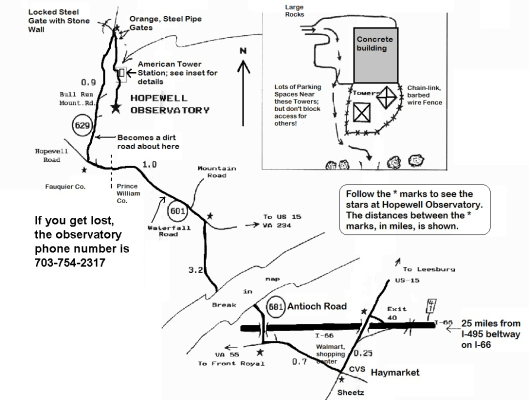
map to hopewell june 2016

A ‘Maker Faire’ in Reston, VA

15 Tuesday Mar 2016

Posted by gfbrandenburg in astronomy, Telescope Making

≈ Leave a comment

Tags

make, maker faire

I went to a “mini maker Faire” in Reston mostly as an exhibitor (on telescope making, hence the home made scopes) but also had a bit of time to visit with other “makers” before the gates opened.

The silly little ears are from a gizmo that was supposed to read and interpret brain waves … either my head was too thick or I broke the gizmo or I am dead: It couldn’t read my brain waves.

It was fun, and I talked to a lot of very interesting people. I regret that I didn’t take Jeff Guerber up on his offer to staff my tables while I went and looked at the other exhibits. Two entire, enormous, modern NoVa public schools (a MS and a HS) were filled with exhibits on all kinds of crafts. Lots of 3D printers, physics stuff, including jugglers in my hall. I have no idea what was in the other ones!

I met a high school girl who had a T-shirt proclaiming her desire to become a mason. She told me she was well aware that there were very few (if any) female masons. I applaud her goal and hope she is successful!

IMG_4321
IMG_4318
IMG_4317
IMG_4319
IMG_4323

Another recent scope at the NCA – ATM workshop at the CCCC

11 Friday Mar 2016

Posted by gfbrandenburg in astronomy, Telescope Making

≈ Leave a comment

Tags

ATM, CCCC, NCA

This ultra-short scope, by Todd M, has a mirror of 4.25″ (108 mm) and a pretty short focal length – about 2 feet (60 cm). He made just about everything, right here in the NCA ATM workshop at the Chevy Chase Community Center. He ground, polished, figured, and even helped aluminize the primary mirror; made the primary cell AND the spider and secondary holder; made all of the rest of the mount that you see; and even made the focuser itself from some plumbing parts!

IMG_4104
IMG_4106

It’s a very nice job, meriting a lot of praise. In case you were wondering, the paint was a special, very-high quality and very expensive top-of-the-line alkyd enamel, costing about $200 per gallon – and we have two of them. Explanation: it was an ‘oops’ can that was specially ordered and mixed for someone who changed their mind and couldn’t return it. In exchange for a non-profit donation receipt in the name of NCA, Bill R was able to get the person to donate both gallons to us.

The spider and secondary holder are very similar to the one made by Ramona D that you can see here. The major differences are:

(1) Todd used busted bandsaw blades rather than steel strapping tape for the vanes. (Both were the same price: free.) After looking at both projects, which both turned out quite nicely, my conclusion is that if you want to use bandsaw blades, you have to heat-treat (anneal) them so they will have less of a tendency to break right at the location where you are trying to bend them by 45 degrees. (Heat it up to cherry red and then let it cool slowly in the air, making it softer and less brittle, I am told…)

(2) And of course, it certainly helps to grind down the teeth of the bandsaw blade both for safety and to reduce weird reflections. Strapping tape is about the same thickness as many band saw blades, but the tape is wider and hence more stable and less prone to turn crooked (I think).

(3) Todd used ordinary 1/4″-20 machine screws (aka bolts) to attach the vanes of the spider to and through the walls of the tube. He cut off the heads of the bolts and ground one side flat near the head, and then drilled a little hole in that flat part, tapped (threaded) that, and used a tiny little machine screw to attach the vane to the specially-prepared screw, in a process that I hope is clearly shown in these three drawings.

Begin with a machine screw (bolt)
Cut off the head, use a grinder or saw to make a flat area (or else you can split the screw down the middle)
Drill and tap (i.e., thread) the little hole; attach to vane; feed the far end through a hole in the wall of the tube; attach securely with a washer and nut.

(4) Ramona, however, used thumbscrews instead of doing all that cutting, filing and tapping. Actually, our little tiny tapping drills didn’t play well with our bit holders – they kept slipping. So she just drilled holes in the center of each thumbscrew head, and bought three very small nuts and bolts and used them in the place of the little screw that Todd used.

(Thumbscrews like these:)

thumbscrews

One Way to Make a Telescope Spider

05 Saturday Mar 2016

Posted by gfbrandenburg in astronomy, Telescope Making

≈ 4 Comments

Tags

ATM, diagonal, dobsonian, spider, Telescope

All Newtonian telescopes require a secondary mirror — a flat mirror held at roughly a 45-degree angle to reflect the light from the primary out to the side. Generally this secondary mirror is an ellipsoid, in order to waste as little light as possible.

One major problem is figuring out how to hold this secondary mirror in place securely without interfering with the passage of light from your distant target. The secondary mirror can be held on a stalk, or on crossed arms like a spider’s web.

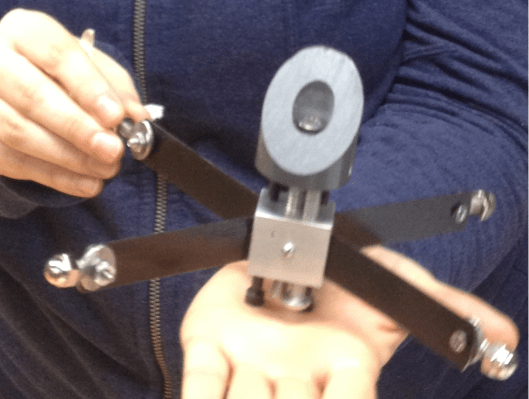
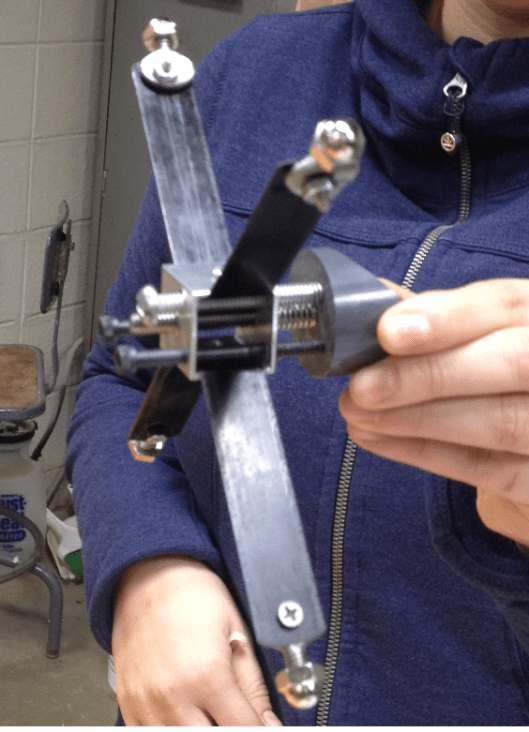
The images below show how Ramona D made a spider using a piece of extruded aluminum tube with a square cross section, several bolts, a spring, a piece of plastic dowel, some pieces of steel strapping tape, a few thumbscrews, and various small nuts and bolts. She did a very neat job, including threading and tapping several small holes in the aluminum tube.

The idea is not original to me: I got the idea from somebody else on line, but unfortunately, I don’t recall the name of the person to whom I should give credit.

Here are some photos that probably do a better job of explaining how to make it than I could explain in many, many paragraphs.

ramonas spider 1.png

ramonas spider 2

ramonas spider 3

ramonas spider 4

A recently-completed telescope

27 Saturday Feb 2016

Posted by gfbrandenburg in astronomy, Telescope Making

≈ Leave a comment

Tags

CCCC, dobsonian, Telescope

Steve S recently finished a telescope with help from the DC-area amateur telescope making (ATM) workshop that I’ve been running at the Chevy Chase Community Center (CCCC) for several years (I took over from the late Jerry Schnall around the turn of the century) with help from several local ATMers and under the auspices of the National Capital Astronomers (NCA).

Steve had made the mirror quite a long time ago (not here in DC). The optics are quite good according to my tests, and if you look at the photos, I think you will agree that the body of the telescope looks excellent as well.

IMG_4177
IMG_4178
IMG_4179

IMG_4184

steve suranovic's scope 5
steve's scope 6

IMG_4183

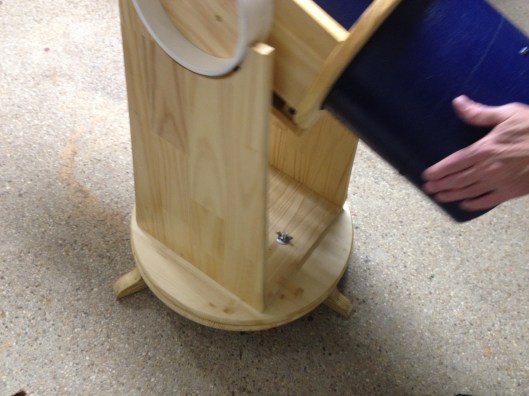
As you can see, he used more-or-less dimensional wood rather than the more conventional plywood. Or should I say, clear pine that had been glued into boards at the lumber factory. He made the cradle with a bolt that allows one to loosen or tighten the grip on the tube so that one can rotate it or shift it forward or back to take care of any changes in balance.

It may not be obvious, but the wood is in fact coated with varnish.

The rocker box is held onto the azimuth bearing with sturdy wingnuts so that it can be more easily transported. The two circular sections of the azimuth bearing were table tops purchased at Lowe’s (IIRC).


Puzzlement when Trying to Figure a Convex Surface Through the Back

14 Saturday Nov 2015

Posted by gfbrandenburg in astronomy, flat, optical flat, Telescope Making

≈ Leave a comment

Tags

ATM, convex, figuring, polarizing filters, Ronchi, strain

Have you ever tried to make a convex optical surface?

If so, you know that it’s much more challenging than a concave one, since the rays of light do not come to a focus at all.

Some of us* at the Amateur Telescope Making workshop here in Washington DC have made several attempts at doing this, pretty much without success. I would like to show you some weird images that we got when we tried to ‘figure’ the convex surface by performing a Ronchi test from the back side, looking through what was supposed to be a flat.

What we find is that even though the glass itself is very clear and free of visible strain when seen by the naked eye or when using crossed polarized filters, it looks like we are looking through an extremely murky and totally un-annealed piece of ancient Venetian glass, causing all sorts of weird striations in what should otherwise be nice, smooth Ronchi lines.

These pictures go in order from outside the radius of curvature to inside the ROC.

IMG_3656 IMG_3660 IMG_3663 IMG_3665 IMG_3667 IMG_3668

You might well think that the glass itself has lots of strain left in it, causing the very weird patterns that you see here. I can prove that this is not the case by showing you a short video that we made with crossed polarizing filters of the 5-inch diameter blank itself and two pieces of plastic (the protective covers for one of the filters). Judge for yourself.

This is not the first time that this strange phenomenon has occurred.

Any suggestions from those with actual experience would be extremely welcome.

===================

* Me, Nagesh K, and Oscar O.

Directions to Hopewell Observatory

25 Tuesday Aug 2015

Posted by gfbrandenburg in astronomy

≈ 2 Comments

DIRECTIONS TO HOPEWELL OBSERVATORY:

Short version, if you have Waze, Google Maps, or some other GPS navigation system: make your goal to be 3804 Bull Run Mountain Road in The Plains, Virginia. That will get you to the gate mentioned in step 6, below. 

Long version:

(1) From the Beltway, take I-66 west about 25 miles to US 15 (Exit 40) at Haymarket. At the light at the end of the ramp, turn left/south onto US 15. (Exit is at approximately latitude 38°49’00″N, longitude 77°38’15″W.)

(2) Go 0.25 mi, at the second light turn right/west onto VA Rt. 55. There is a Sheetz gas station & convenience store at this intersection, along with a CVS, a McDonald’s, and a Walmart-anchored shopping center on the NW corner. This is a good place to stop for restrooms or supplies.

(3) After 0.7 mi on Va 55, turn right (north) onto Antioch Rd., Rt. 681. You will pass entrances for Boy Scouts’ Camp Snyder and the Winery at La Grange. (38°49’12″N, 77°39’29″W)

(4) Follow Antioch Rd. to its end (3.2 mi), then turn left (west) onto Waterfall Rd. (Rt. 601), which will become Hopewell Rd. (38°51’32″N, 77°41’10″W)

(5) After 1.0 mi, bear right onto Bull Run Mountain Rd., Rt. 629 (this is beyond Mountain Rd.). This will be the third road on the right, after Mountain Rd. and Donna Marie Ct. (38°52’00″N, 77°42’08″W) Please note that Google Earth and Google Maps show a non-existent road, actually a power line, in between Donna Marie Ct. and Bull Run Mtn. Rd.

(6) In 0.9 mi, enter the driveway on the right, with the orange pipe gate. There is a stone gate on the left, opposite the entrance. We’ll have some signs up. This is a very sharp right hand turn. (38°52’36″N, 77°41’55″W)

(7) Follow the narrow paved road up the ridge to the cell phone tower station. You can park here (but PLEASE don’t block the driveway around the towers!) and proceed the remaining few hundred feet to the observatory on foot, or…

(8) Take the grassy track around to the right of the station, and continue south, through (or around) a white metal bar gate. The few places among the trees near our operations building, the small house-like structure in the woods, are reserved for handicapped people, Observatory members, and those bringing telescopes. Please watch out for pedestrians, especially children! The observatory itself is in the clearing a short distance ahead.

Location of the observatory is approximately latitude 38°52’12″N, longitude 77°41’54″W. The drive takes about 45 minutes from the Beltway if the traffic is light. (Otherwise, it can take much longer!) A map to the site follows. If you get lost, you can text me (Guy) at 202 dash 262 dash 4274.

map to hopewell oct 2019

← Older posts
Newer posts →

Subscribe

  • Entries (RSS)
  • Comments (RSS)

Archives

  • February 2026
  • December 2025
  • November 2025
  • October 2025
  • September 2025
  • July 2025
  • January 2025
  • November 2024
  • October 2024
  • August 2024
  • July 2024
  • May 2024
  • April 2024
  • January 2024
  • December 2023
  • October 2023
  • August 2023
  • June 2023
  • May 2023
  • April 2023
  • November 2022
  • October 2022
  • August 2022
  • July 2022
  • June 2022
  • May 2022
  • April 2022
  • February 2022
  • January 2022
  • December 2021
  • October 2021
  • September 2021
  • August 2021
  • July 2021
  • June 2021
  • May 2021
  • March 2021
  • December 2020
  • October 2020
  • September 2020
  • August 2020
  • March 2020
  • February 2020
  • January 2020
  • December 2019
  • November 2019
  • September 2019
  • August 2019
  • June 2019
  • May 2019
  • January 2019
  • November 2018
  • October 2018
  • September 2018
  • August 2018
  • May 2018
  • March 2018
  • January 2018
  • November 2017
  • October 2017
  • September 2017
  • August 2017
  • July 2017
  • June 2017
  • May 2017
  • April 2017
  • February 2017
  • December 2016
  • September 2016
  • June 2016
  • May 2016
  • April 2016
  • March 2016
  • February 2016
  • January 2016
  • December 2015
  • November 2015
  • August 2015
  • July 2015
  • April 2015
  • March 2015
  • February 2015
  • January 2015
  • December 2014

Categories

  • astronomy
  • astrophysics
  • education
  • flat
  • History
  • Hopewell Observatorry
  • Math
  • monochromatic
  • nature
  • optical flat
  • Optics
  • Safety
  • science
  • teaching
  • Telescope Making
  • Uncategorized

Meta

  • Create account
  • Log in

Blog at WordPress.com.

  • Subscribe Subscribed
    • Guy's Math & Astro Blog
    • Join 54 other subscribers
    • Already have a WordPress.com account? Log in now.
    • Guy's Math & Astro Blog
    • Subscribe Subscribed
    • Sign up
    • Log in
    • Report this content
    • View site in Reader
    • Manage subscriptions
    • Collapse this bar
 

Loading Comments...