Possible ‘You’ve been noticed’ card to give to science fair participants?
07 Monday Mar 2016
Posted in Uncategorized

07 Monday Mar 2016
Posted in Uncategorized
05 Saturday Mar 2016
Posted in astronomy, Telescope Making
All Newtonian telescopes require a secondary mirror — a flat mirror held at roughly a 45-degree angle to reflect the light from the primary out to the side. Generally this secondary mirror is an ellipsoid, in order to waste as little light as possible.
One major problem is figuring out how to hold this secondary mirror in place securely without interfering with the passage of light from your distant target. The secondary mirror can be held on a stalk, or on crossed arms like a spider’s web.
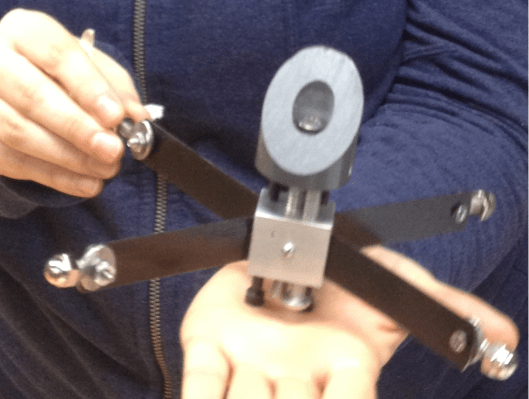
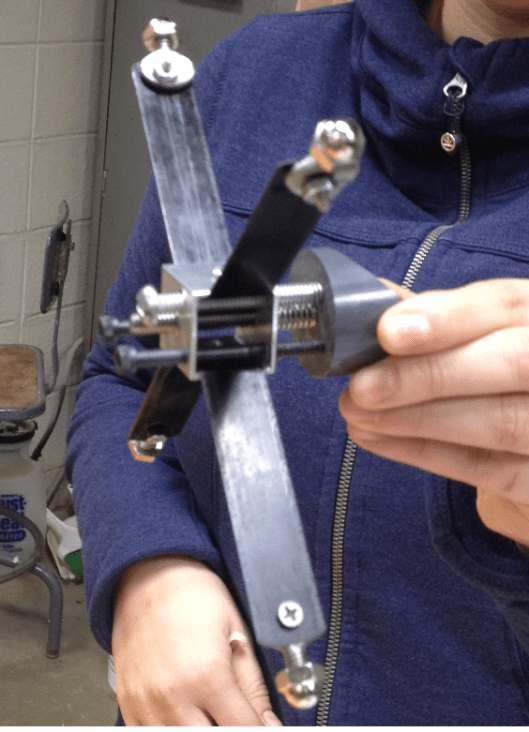
The images below show how Ramona D made a spider using a piece of extruded aluminum tube with a square cross section, several bolts, a spring, a piece of plastic dowel, some pieces of steel strapping tape, a few thumbscrews, and various small nuts and bolts. She did a very neat job, including threading and tapping several small holes in the aluminum tube.
The idea is not original to me: I got the idea from somebody else on line, but unfortunately, I don’t recall the name of the person to whom I should give credit.
Here are some photos that probably do a better job of explaining how to make it than I could explain in many, many paragraphs.


27 Saturday Feb 2016
Posted in astronomy, Telescope Making
Steve S recently finished a telescope with help from the DC-area amateur telescope making (ATM) workshop that I’ve been running at the Chevy Chase Community Center (CCCC) for several years (I took over from the late Jerry Schnall around the turn of the century) with help from several local ATMers and under the auspices of the National Capital Astronomers (NCA).
Steve had made the mirror quite a long time ago (not here in DC). The optics are quite good according to my tests, and if you look at the photos, I think you will agree that the body of the telescope looks excellent as well.


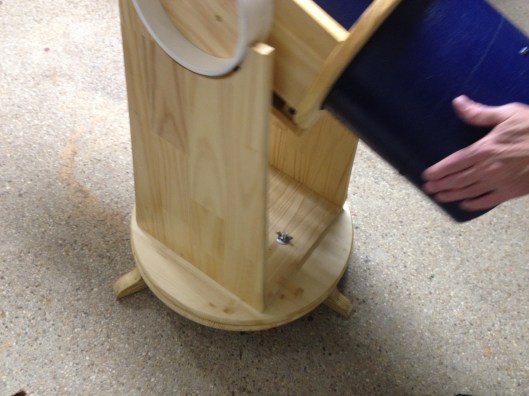
As you can see, he used more-or-less dimensional wood rather than the more conventional plywood. Or should I say, clear pine that had been glued into boards at the lumber factory. He made the cradle with a bolt that allows one to loosen or tighten the grip on the tube so that one can rotate it or shift it forward or back to take care of any changes in balance.
It may not be obvious, but the wood is in fact coated with varnish.
The rocker box is held onto the azimuth bearing with sturdy wingnuts so that it can be more easily transported. The two circular sections of the azimuth bearing were table tops purchased at Lowe’s (IIRC).
23 Saturday Jan 2016
Posted in Uncategorized
If you have ever cleared a sidewalk after a snowstorm (like I did this morning), you’ve probably noticed that shoveling snow is a lot of hard work.
I wondered just how hard I was working to shovel our porch and sidewalk, so I did some rough calculations.
Not knowing the weights or masses of snow or water in American customary units I did it all in metric units because it’s so much easier.
Using a construction tool, I measured the snow as being about 13″ deep, or about 33 cm (1/3 of a meter). I shoveled a path that was roughly a meter or so wide, and a grand total of about 21 long paces (roughly a meter each) in length.
Which means I had shoveled a volume of 1/3 *21*1 or 7 cubic meters. If that was all liquid or solid water, that would be exactly 7 metric tons. But snow is about 90%air, so if we divide that by 10, we get 700 kilograms instead, or about 1500 pounds of fluff.
Huff, huff, puff indeed.
By the way, my son Josef Brandenburg, a DC-area fitness expert and personal trainer, has a nice interview with Bruce Depuyt on the right way to shovel so that you don’t throw your back out and end up in the emergency room along with many thousands of other folks. (I didn’t.)
04 Friday Dec 2015
Posted in Telescope Making
18 Wednesday Nov 2015
Posted in Uncategorized
Got another puzzle for you: an f/3 8″ mirror that appears to have been made by laying a plastic layer on an unfinished thin mirror blank! I’ve never seen anything like it!
Anybody got any ideas?
Some background: Some weeks ago, Al P brought in to the DC-area ATM workshop the optics for a telescope that someone gave him a decade or so earlier. The telescope originally had some sort of thin, full-sized window that we determined was almost perfectly flat, so it had no corrective power that we could determine. He thought that the diagonal mirror had been attached to the window, but the rest of the telescope had long since disappeared. The aluminum layer on the mirror was in fairly decent shape considering how old the mirror was.
The mirror was very thin: 8″ across (20 cm) and only about 1 cm thick, so about 20:1 instead of the 6:1 diameter-to-thickness ration that used to be recommended in the 1930s through 1990s. The back of the mirror blank had circular grooves impressed into it, so many that at first glance it looked like an old-time glass LP record (rather than a vinyl one).
It was also very ‘fast’, with an focal ratio of almost exactly three (3)!
Unfortunately, the mirror was seriously undercorrected, and thus unusable if put into a telescope as is, even though a Ronchi test showed no signs of turned-down edge or of unwanted roughness or weird zones. A numerical Foucault test with Couder-style zones, repeated several times, revealed the lack of correction.
Eventually Al decided to try to refigure the mirror with an ordinary pitch lap, so he removed the aluminum layer with muriatic acid (HCl), and we remade a burgundy pitch lap and tried to get the lap into contact. It seemed to Al that the original bevel had pretty much vanished, so he used a fairly coarse sharpening stone to bring it back. We noticed a funny texture around the end of his bevel but weren’t sure what it was.
When we pressed the mirror against the lap, we immediately discovered that there was a huge amount of bumpiness and jerkiness – something was catching the lap, much like riding a Big Wheel trike on a cobblestone street. Plus, the pitch tended to stick to the mirror and had to be repeatedly removed with fingernails, turpentine, and paint thinner.
We tried rewarming and re-pressing the lap, with no improvement. When we ran our fingers around the edge of the glass, near the bevel, it seemed like there was a raised rim, almost like on a saucer. So Al got out a finer sharpening stone and increased the bevel all the way around, to about 3 or 4 mm wide. Still no improvement in the bumpiness, and the weird texture around the edge of the glass got even worse.
Then we tried removing all traces of upward-facing lip around the edge of the glass by taking a large sort-of-flat piece of 1/4″ glass, sprinkling some 220 grit and water on it, and stroking the mirror, face down, against the grit and piece of glass.
That also did not do anything to improve the bumpiness. Plus, it began to look to us more and more like this mirror had been made in a totally weird manner: a fairly rough piece of glass was hogged out to the correct curvature, then somehow coated with a smooth layer of plastic, then aluminized. If they did any figuring on it, they clearly did not use a pitch lap!
I attach a few photos that are badly out of focus because iphones don’t like to take close ups. The bright bars are LED fluorescent lights in the ceiling; the concentric rings or grooves are on the back of the mirror. Pay attention to the irregularly-shaped non-shiny areas, where we think the original plastic coating came off.


I am also going to link to a youtube video that I took through a cheap 60X – 100X LED microscope.
A few more clues: the plastic layer (if that’s what it is) does not seem to be removed with either HCl or turpentine or mineral spirits.
If anybody has any thoughts on this mysterious mirror, Al and I will be all ears.
Meanwhile he plans to create a new tool from dental plaster and porcelain tiles and regrind it to f/5.
14 Saturday Nov 2015
Posted in astronomy, flat, optical flat, Telescope Making
Have you ever tried to make a convex optical surface?
If so, you know that it’s much more challenging than a concave one, since the rays of light do not come to a focus at all.
Some of us* at the Amateur Telescope Making workshop here in Washington DC have made several attempts at doing this, pretty much without success. I would like to show you some weird images that we got when we tried to ‘figure’ the convex surface by performing a Ronchi test from the back side, looking through what was supposed to be a flat.
What we find is that even though the glass itself is very clear and free of visible strain when seen by the naked eye or when using crossed polarized filters, it looks like we are looking through an extremely murky and totally un-annealed piece of ancient Venetian glass, causing all sorts of weird striations in what should otherwise be nice, smooth Ronchi lines.
These pictures go in order from outside the radius of curvature to inside the ROC.
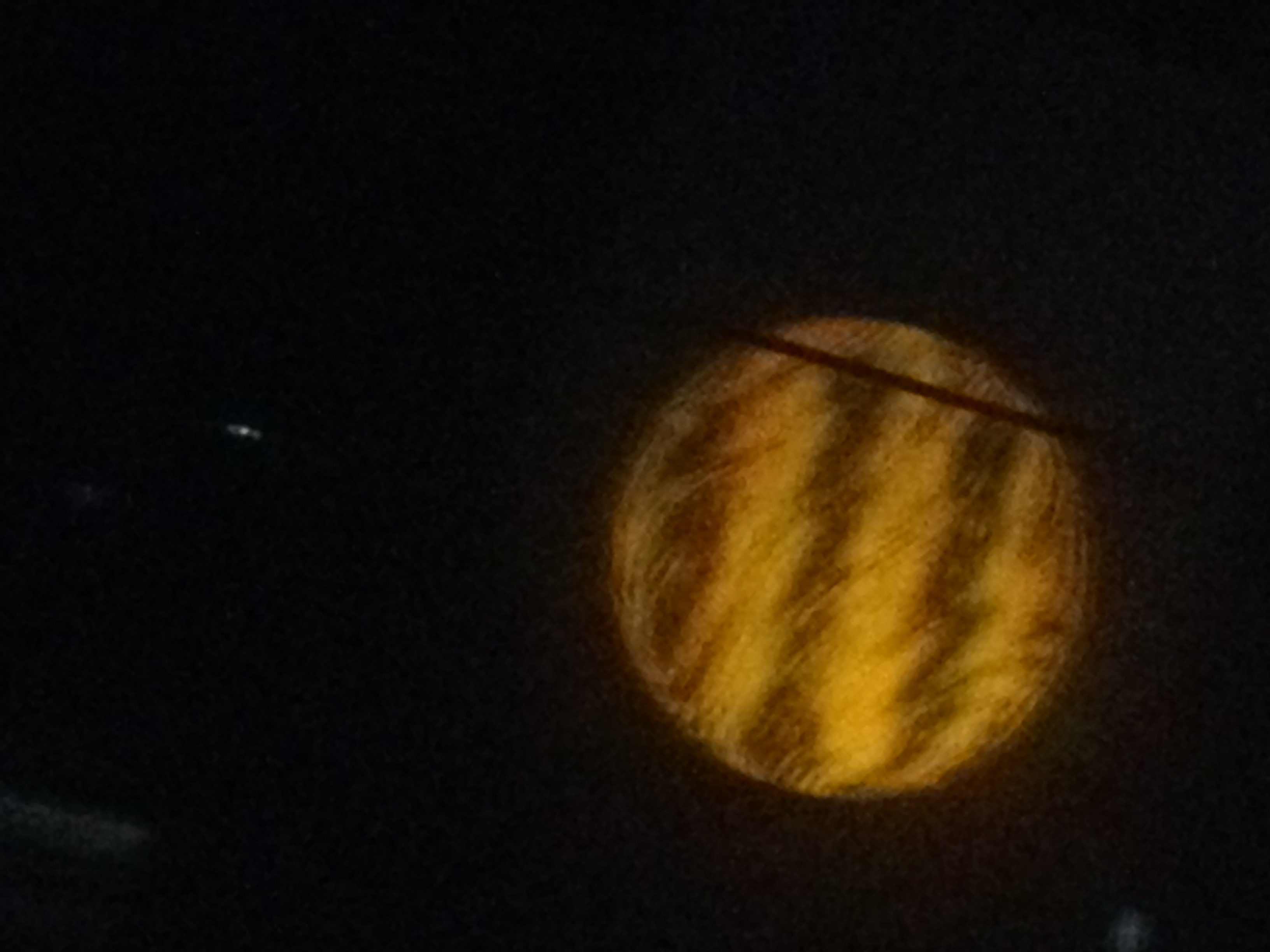
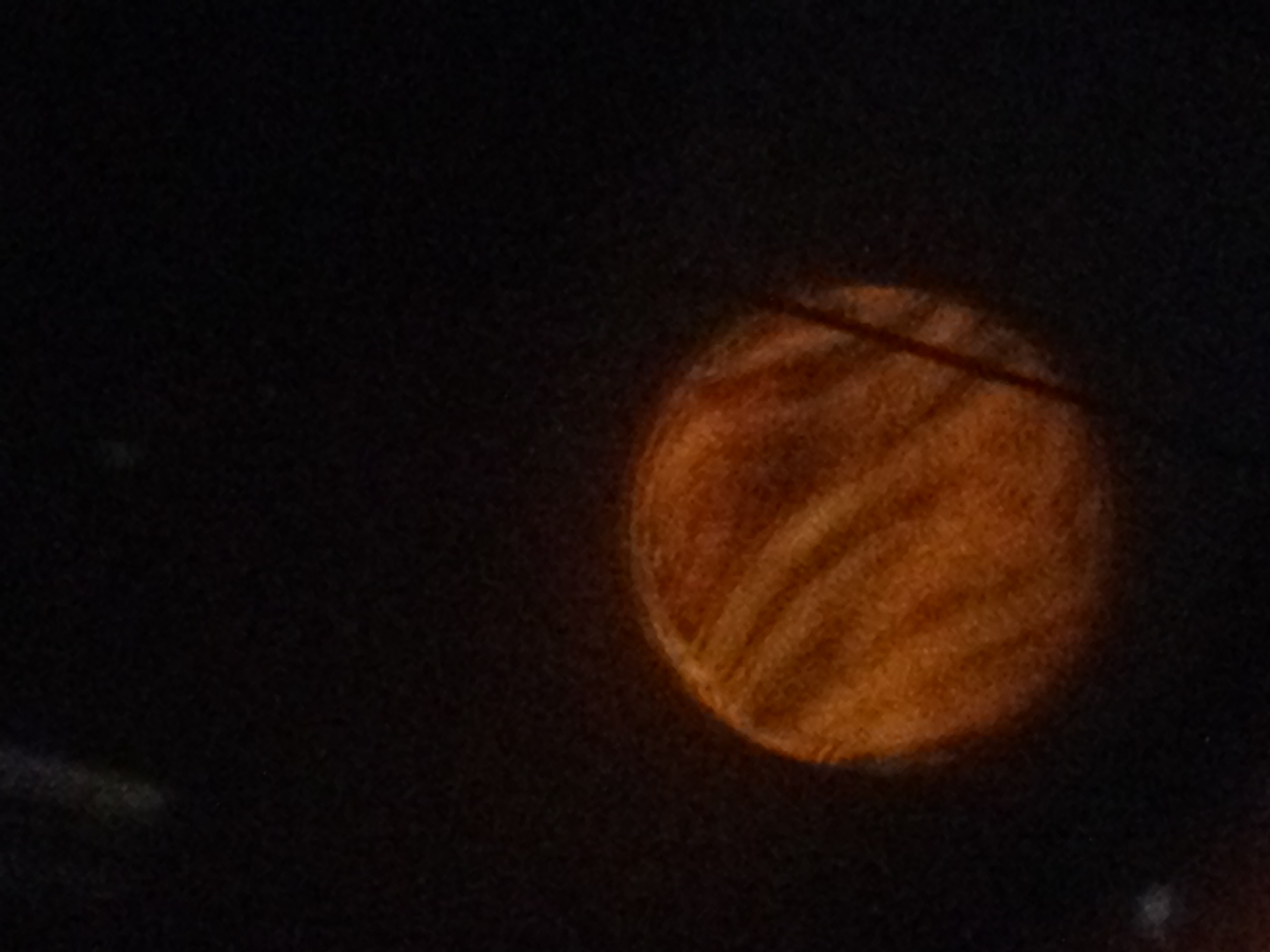
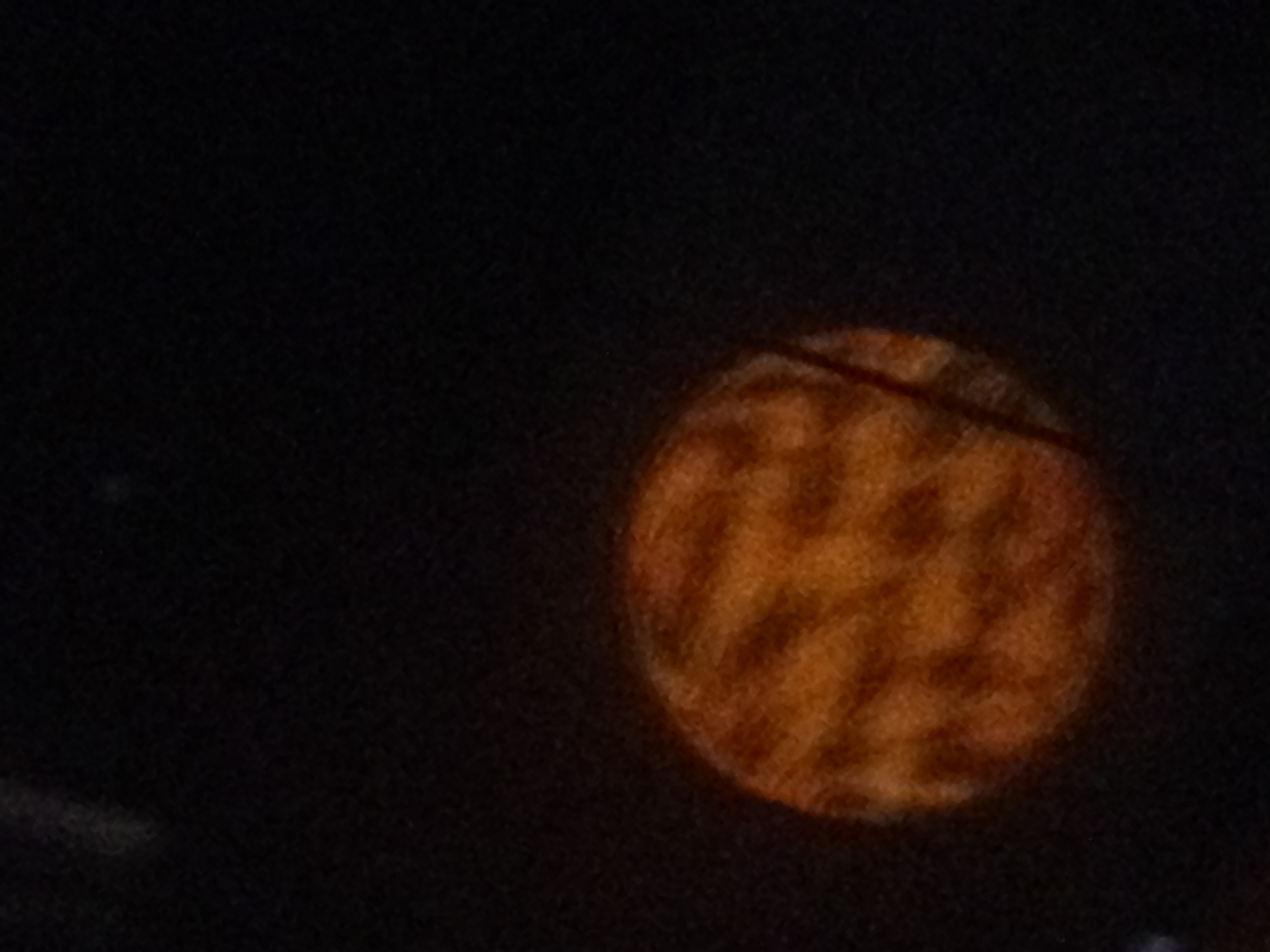


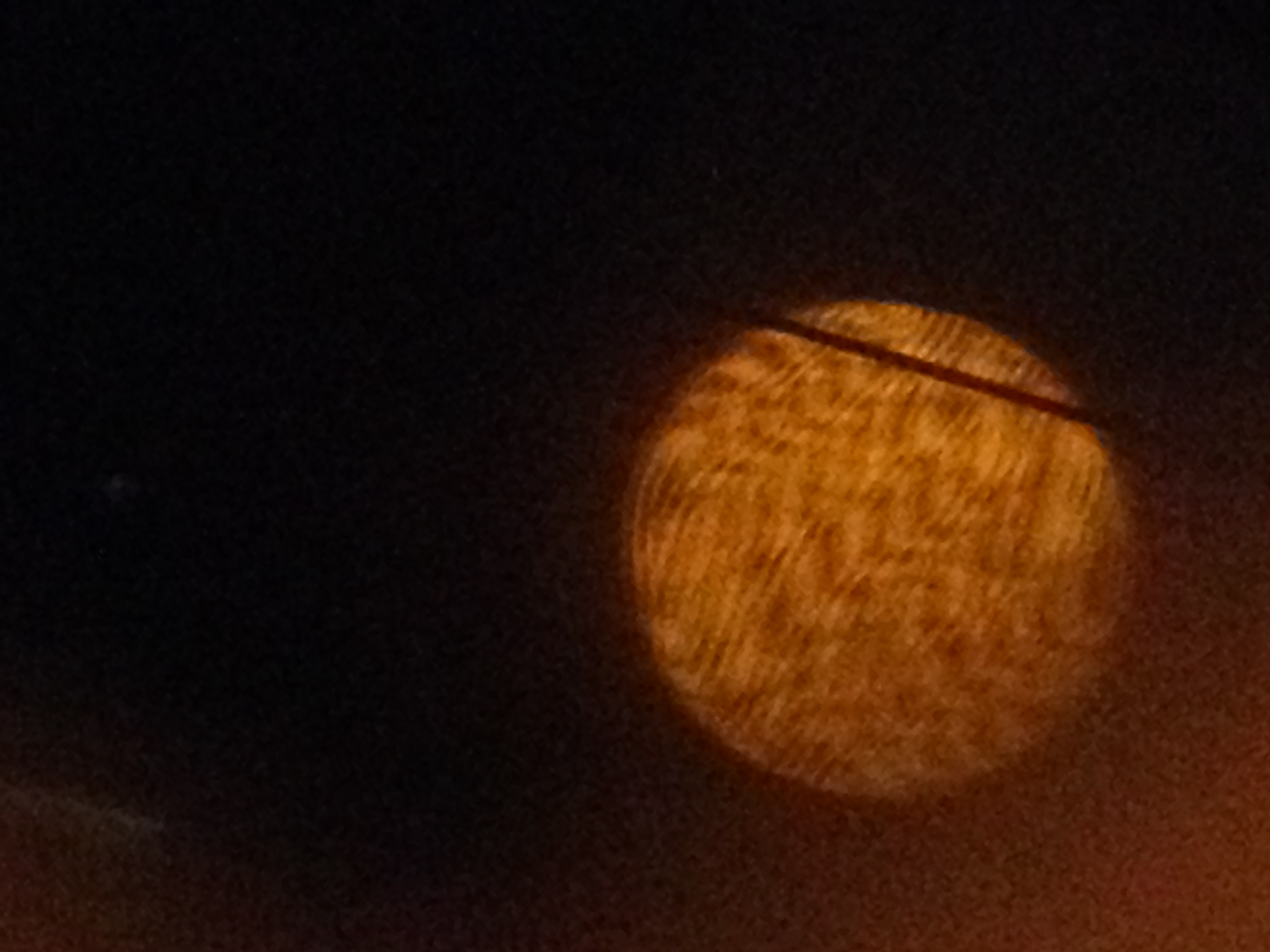
You might well think that the glass itself has lots of strain left in it, causing the very weird patterns that you see here. I can prove that this is not the case by showing you a short video that we made with crossed polarizing filters of the 5-inch diameter blank itself and two pieces of plastic (the protective covers for one of the filters). Judge for yourself.
This is not the first time that this strange phenomenon has occurred.
Any suggestions from those with actual experience would be extremely welcome.
===================
* Me, Nagesh K, and Oscar O.
25 Tuesday Aug 2015
Posted in astronomy
Short version, if you have Waze, Google Maps, or some other GPS navigation system: make your goal to be 3804 Bull Run Mountain Road in The Plains, Virginia. That will get you to the gate mentioned in step 6, below.
(1) From the Beltway, take I-66 west about 25 miles to US 15 (Exit 40) at Haymarket. At the light at the end of the ramp, turn left/south onto US 15. (Exit is at approximately latitude 38°49’00″N, longitude 77°38’15″W.)
(2) Go 0.25 mi, at the second light turn right/west onto VA Rt. 55. There is a Sheetz gas station & convenience store at this intersection, along with a CVS, a McDonald’s, and a Walmart-anchored shopping center on the NW corner. This is a good place to stop for restrooms or supplies.
(3) After 0.7 mi on Va 55, turn right (north) onto Antioch Rd., Rt. 681. You will pass entrances for Boy Scouts’ Camp Snyder and the Winery at La Grange. (38°49’12″N, 77°39’29″W)
(4) Follow Antioch Rd. to its end (3.2 mi), then turn left (west) onto Waterfall Rd. (Rt. 601), which will become Hopewell Rd. (38°51’32″N, 77°41’10″W)
(5) After 1.0 mi, bear right onto Bull Run Mountain Rd., Rt. 629 (this is beyond Mountain Rd.). This will be the third road on the right, after Mountain Rd. and Donna Marie Ct. (38°52’00″N, 77°42’08″W) Please note that Google Earth and Google Maps show a non-existent road, actually a power line, in between Donna Marie Ct. and Bull Run Mtn. Rd.
(6) In 0.9 mi, enter the driveway on the right, with the orange pipe gate. There is a stone gate on the left, opposite the entrance. We’ll have some signs up. This is a very sharp right hand turn. (38°52’36″N, 77°41’55″W)
(7) Follow the narrow paved road up the ridge to the cell phone tower station. You can park here (but PLEASE don’t block the driveway around the towers!) and proceed the remaining few hundred feet to the observatory on foot, or…
(8) Take the grassy track around to the right of the station, and continue south, through (or around) a white metal bar gate. The few places among the trees near our operations building, the small house-like structure in the woods, are reserved for handicapped people, Observatory members, and those bringing telescopes. Please watch out for pedestrians, especially children! The observatory itself is in the clearing a short distance ahead.
Location of the observatory is approximately latitude 38°52’12″N, longitude 77°41’54″W. The drive takes about 45 minutes from the Beltway if the traffic is light. (Otherwise, it can take much longer!) A map to the site follows. If you get lost, you can text me (Guy) at 202 dash 262 dash 4274.

18 Tuesday Aug 2015
Posted in Uncategorized
A wonderful astronomical weekend near Spruce Knob WV, at the Almost Heaven Star Party.
The fields at The Mountain Institute where it’s held remind me of the farm I grew up on, near Clarksburg MD, and the farm I lived in with Susan Greenthal Hurd in East Ryegate VT about 44 years ago.
The altitude here in WV does mimic the climate in VT. I have never gotten bitten here at TMI or AHSP or anywhere else I’ve hiked or canoed in West Virginia by any ticks or chiggers – which bedeviled me and my siblings 50-60 years ago in Clarksburg MD and continue to bite me at the Hopewell Observatory in Northern VA near Haymarket.
I brought my 12.5″ truss-tube dob, which you can see in one picture. I had just re-made the secondary cage and spider and secondary adjustment mechanism. I had to perform emergency surgery to cut off the truss tubes by exactly one inch so that all of the eypieces would actually come to a focus.
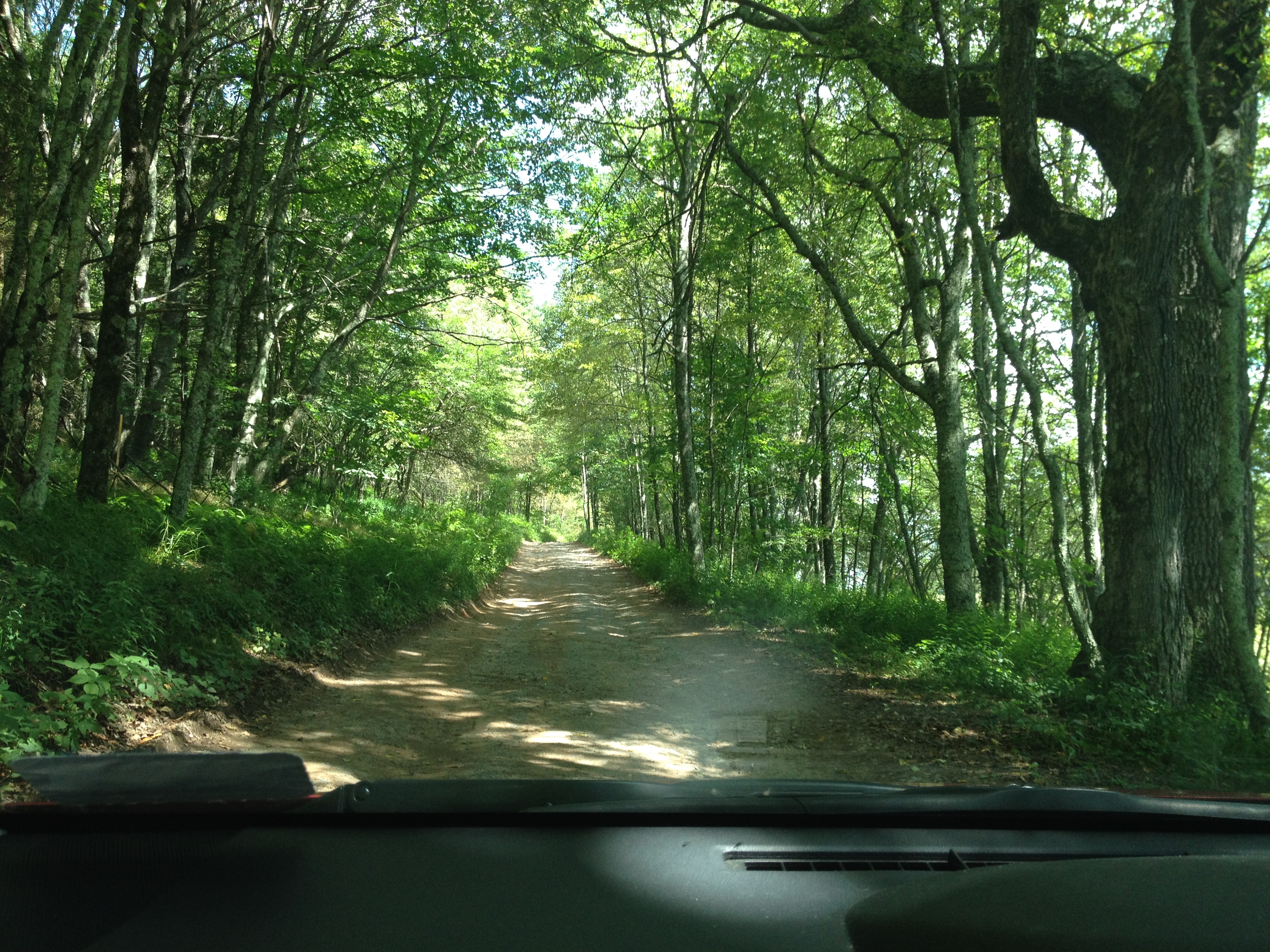
Part of the road up to TMI and AHSP

Baling hay in fields right next to TMI / AHSP
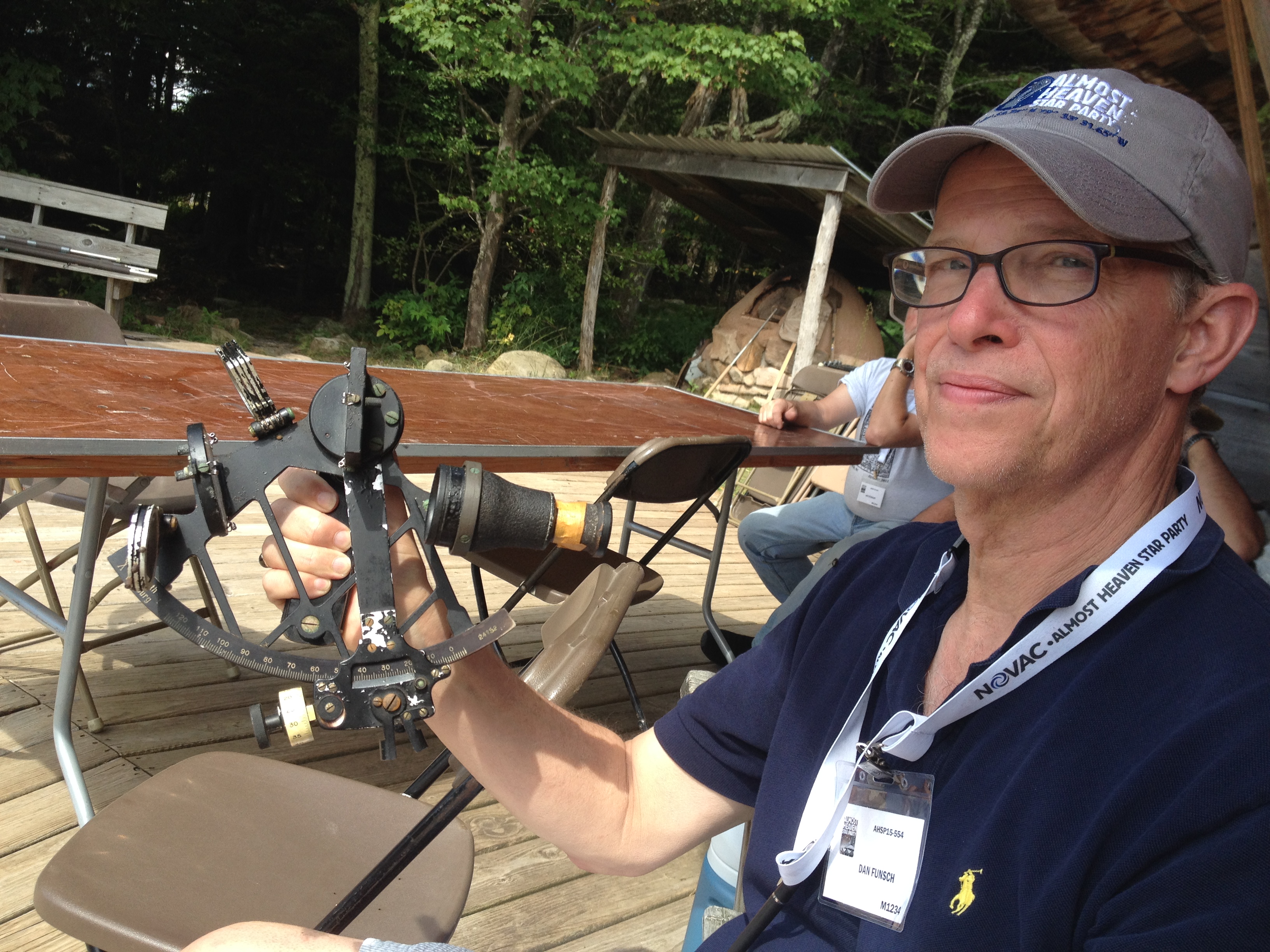
Learning how to use a sextant; if you know the exact time, you can use this to calculate your location to within 100 meters or so.

Beautiful but slightly threatening clouds the first night ended up dissipating. We had three beautiful nights of observing!
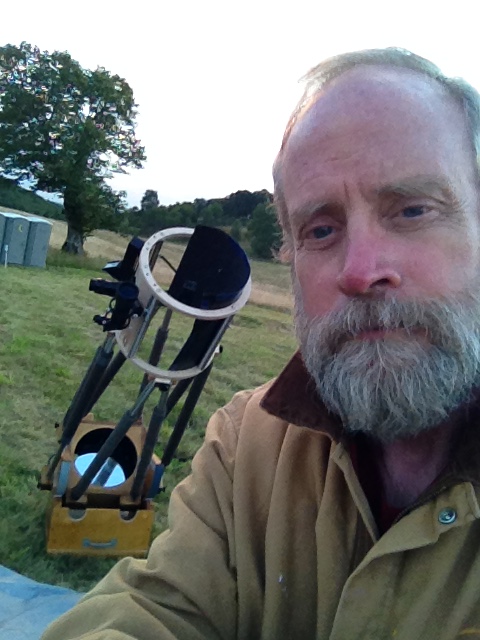
Me and my 12.5″ truss-tube dob that I built,
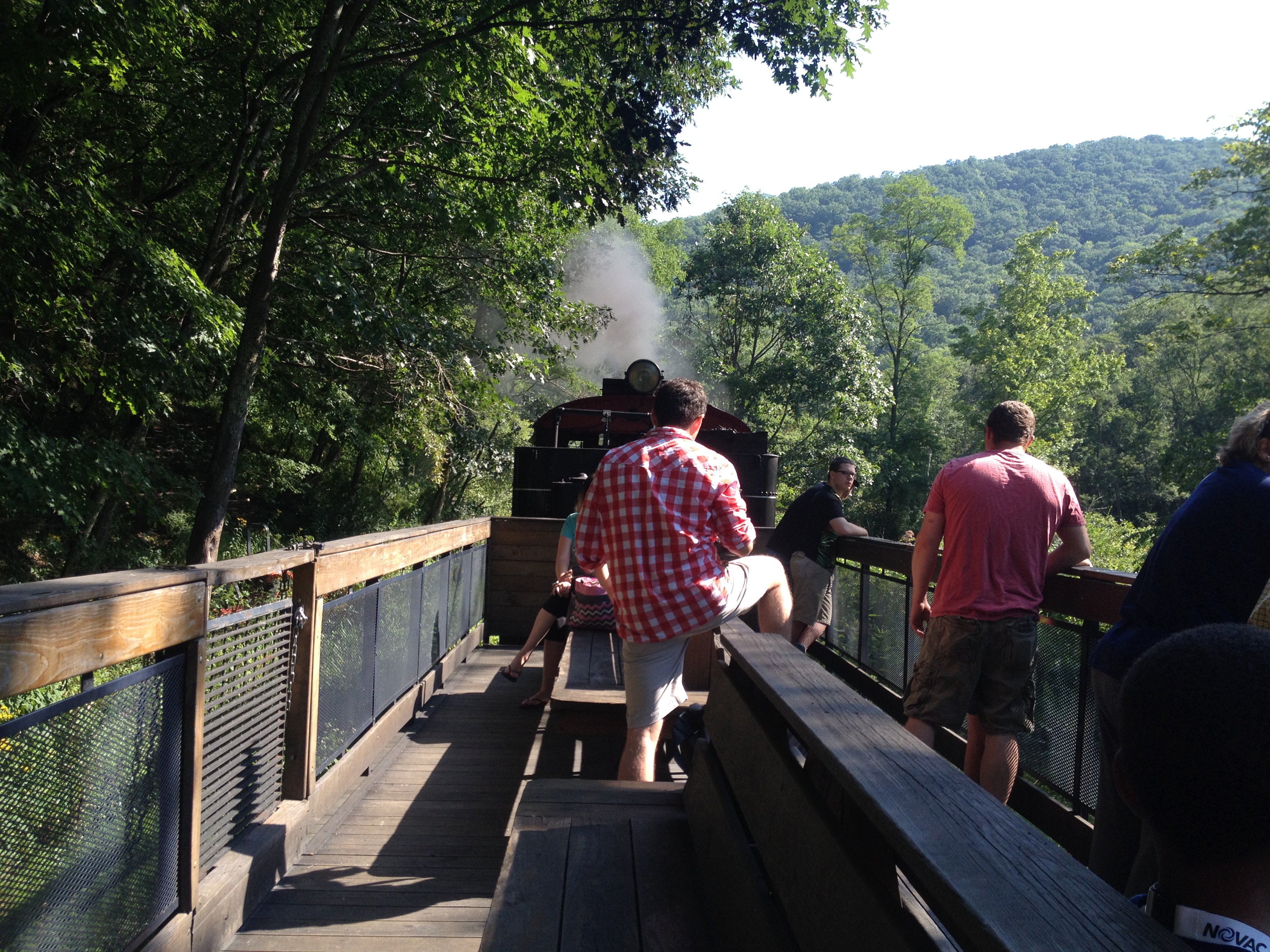
This is the Durbin Rocket railroad – a small and slow coal-burning locomotive designed to carry heavy loads of lumber. If you sit behind the engine, you WILL be coated with coal dust and cinders.

A friend’s minimalist, ultra-light dobsonian telescope, either 18 or 20 inch diameter. Note the lack of mirror box! It also tracks and has both Argo Navis and a go-to capability.

One of the many excellent talks. In this one, Jan Wisniewski (Vish – NYEV-ski) is showing how to make an IR on-axis autoguider.

Here I demonstrate how light and insubstantial are the famous Seneca Rocks that I passed on the way back from the star party.
18 Tuesday Aug 2015
Posted in astronomy, Telescope Making
Tags
I put all of my tickets (over 30!) into the raffle for a 100-degree-apparent-field-of-view eyepiece at AHSP but didn’t win it. I probably should have put a few tickets in some other raffles. They had a whole lot of different stuff being raffled off. The eyepiece I wanted was donated by Hands On Optics. At AHSP they give you ten tickets as part of your registration, and then you can buy more of them. Elizabeth Warner and her husband left the morning of the raffle (Sunday) and gave me theirs, which was very nice of them.
 Guy's Math & Astro Blog